A review of all new global literature published in the week of June 29th, 2026 yields zero (0) Additive findings to the NeuroLoop Protocal. However this week does introduce several studies that are supportive of BRIGHT’s protocol and deserve dicussion. The Domains Addressed: FUEL (Mitochondrial Metabolism), SYNC (tSCS – Spinal Neuromodulation Protocols), and UPDATE (Neuroplastic & Motor Learning Adaptations).
Executive Summary: Horizon Filter Evaluation of 26 Studies – Week 27, June 29, 2026
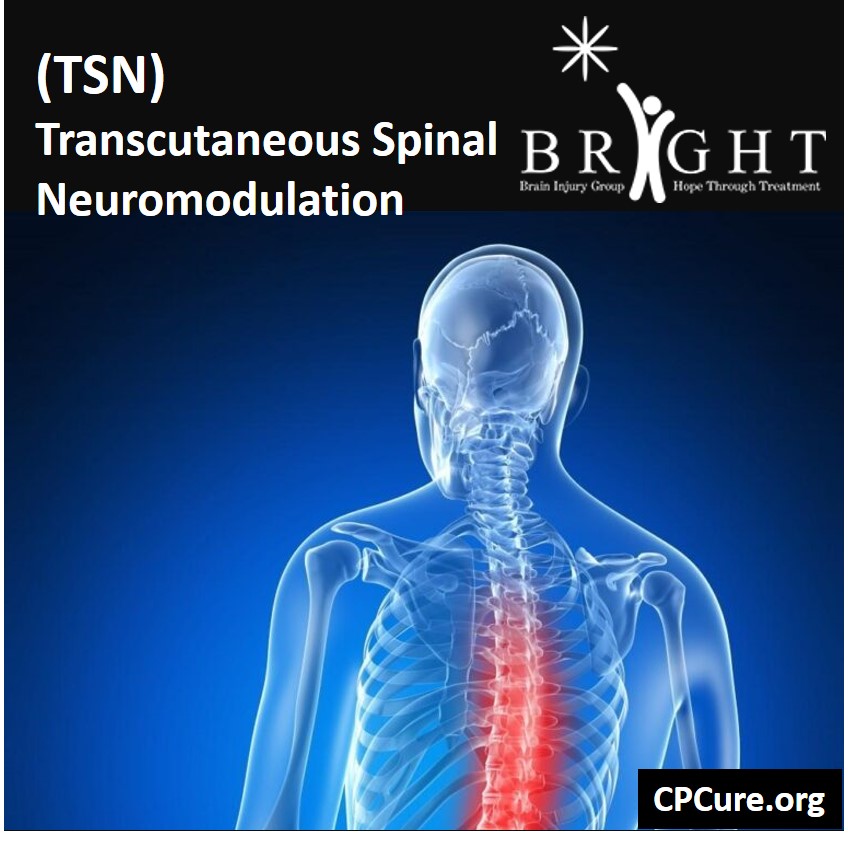
Non-invasive transcutaneous spinal neuromodulation (tSCS) (Study 14 Hastings et al. 42333782) targets multiple motor impairments simultaneously, supporting BRIGHT’s long held premise that functional recovery depends on addressing systemic neural network coordination rather than isolated mechanical components. This study is strongly supportive of the SYNC domain as this technology is mature, mobile, inexpensive and safe enough to be directly integrated into BRIGHT’s first pilot projects.
While CP originates in the brain, the actual functional impairment—the spasticity, stiffness, and co-contraction—occurs because the spinal cord reflex loops are running out of control. Stimulating the brain via tDCS – Transcranial Direct Current Stimulation. [1] (another technology being reviewed by BRIGHT) only works “top-down,” gently altering cortical excitability. It cannot actively stop hyperactive reflex arcs in the lower limbs in real-time. tSCS works at the exact junction where the sensory nerves meet the motor nerves. By quieting the hyperactive local spinal circuits directly, it strips away spasticity from the bottom up. This leaves the pathways clear so that whatever voluntary signals do leave the brain can travel down to the legs or hands without being choked out by noise.
Studies 5 (Sangkrai et al. 42340010) and 12 (Horwath et al. 42349896) highlight an important biological reality: children with cerebral palsy face reduced complex activity. Because of this, they exhibit profound skeletal muscle impairments and thus poor mitochondrial respiration independent of fiber type distribution. This underlying metabolic limitation helps explain why mechanical interventions—such as percutaneous muscle lengthening (Study 6 – Tedesco et al. 42340008) or rectus femoris transfers (Study 10 de Morais Filho 42340171) — frequently show limited success in improving functional walking ability. But this realization does not add any new information to the NeuroLoop Protocol. You cannot use cellular mitochondrial respiration as a real-time closed-loop trigger for a spinal neuromodulation device because it is a latent, trailing metabolic downstream signal. Ask any parent and they can tell you when their child’s muscles are growing fatigued thus providing the same level of information then more invasive tissue biopsies. Thus for now, this biomarker is either too invasive (biopisy) or non-invasive methods such as Near-Infrared Spectroscopy (NIRS) are too slow (they are reading latent information as opposed to real-time) to be highly vale-added to our real-time, closed loop approach.
Looking outside of the specific Week 27 focus, other recent studies also should be noted. The physiological foundation for applying this spinal architecture to central brain injuries—like HIE or stroke—is directly validated by the landmark University of Pittsburgh and Carnegie Mellon clinical trials led by de_Freitas et al. (PMID: 36807682). While this study in invasive, their overall work proved that modulating cervical spinal circuits can immediately unmask and amplify weak, residual descending commands from a damaged brain, restoring volitional upper-limb control. Crucially, the landmark Up-LIFT multi-center trial paper by Chet Moritz et al. in Nature Medicine is PMID: 38769431 demonstrates that this exact therapeutic mechanism can be delivered completely non-invasively via surface-level skin patches. By bypassing the risks of surgical implants while achieving a 72% functional responder rate, the Moritz data confirms that surface currents safely penetrate to the dorsal root afferents, providing the precise non-invasive tool BRIGHT requires to lower the activation threshold of distal loops and permanently rewire the motor connectome.
Study 1 Gürlek et al. 42339598 (and Iamchaimongkol et al. (42351213))supports the BRIGHT NeuroLoop Protocol by validating how active, visually engaged therapy (Action Observation and Mirror Therapy) drives neuroplastic reorganization to bypass damaged pathways. Mapping to BRIGHT’s core domains, the study demonstrates that such methods trigger motor pathways (PRIME), modulate interhemispheric inhibition to unlock cortical capacity (UPDATE), and improve fine motor control through tightened sensorimotor feedback (SYNC). Detailed mapping of this study to the BRIGHT NeruoLoop Protocol’s operational domains indicates how targeted sensory input drives functional rewiring.
Action Observation Therapy (AOT) and Mirror Therapy (MT) are both visual, brain-based rehabilitation techniques used to retrain the brain after neurological injuries, but they use entirely different visual inputs and pathways. The core difference is that AOT involves watching someone else (or a video) perform a task, while MT involves looking into a mirror to watch your own unaffected limb move while tricking your brain into thinking it is your affected limb. [1, 2, 3]
The recent clinical trial by Karamancıoğlu et al. (Study 23) provides a bittersweet validation of Diaphragmatic Manual Therapy, highlighting a massive, decades-long lost opportunity for the pediatric brain injury community. As early as 2002, BRIGHT met face-to-face with Leonid Blyum and recognized that his Advanced Biomechanical Rehabilitation (ABR) correctly prioritized the structural volume and hydraulic pressure of the internal fascia—critical elements that mainstream medicine entirely ignored. However, instead of integrating these physical breakthroughs into an open-source, global neurological loop to achieve true functional utility, Blyum chose proprietary isolation, siloing his model that amounted to just a fractured fraction of a complete solution. By sidelining the active nervous system and sensory-motor mapping championed by BRIGHT, Leonid’s decision ensured that the global community lost out on decades of synergy. Today, BRIGHT finally resolves this historical fragmentation by codifying this diaphragmatic reset as part of Step Zero of the NeuroLoop Protocol, ensuring physical hardware changes are paired with targeted brain re-wiring.
Week 27 Master Filter Matrix
| Status | Core Finding & Target Domain | Source / PMID |
| Supportive | Study 1 (Gurlek et al.) ➔ Supports UPDATE: Validates Action Observation Therapy combined with Mirror Therapy for enhancing upper extremity manual dexterity and grip strength. | 42339598 |
| Legacy | Study 2 (Ryu et al.) ➔ Supports GUIDE: Links nonambulatory status (GMFCS IV/V) to high rates of hip deformity driven by severe adductor spasticity and pelvic obliquity. | 42363545 |
| Supportive | Study 3 (Sugiyama et al.) ➔ Supports GUIDE: Details high rates of severe hip dysplasia, subluxation, and degenerative arthritis in adults with CP due to lifelong atypical loading. | 42357814 |
| Legacy | Study 4 (Dirlik et al.) ➔ Supports GUIDE: Validates Dega acetabuloplasty for effectively remodeling the hip socket and improving femoral head coverage in pediatric neurogenic hip dislocation. | 42343557 |
| Supportive | Study 5 (Dayanidhi et al.) ➔ Supports FUEL: Identifies decreased mitochondrial respiration and lower enzyme complex activity in skeletal muscle, confirming an intrinsic metabolic deficit. | 42340010 |
| Legacy | Study 6 (Tedesco et al.) ➔ Supports GUIDE: Shows that percutaneous musculotendinous lengthening safely reduces localized contractures but yields highly variable long-term functional structural outcomes. | 42340008 |
| Supportive | Study 7 (Taburet et al.) ➔ Supports CLEAR: Validates point-of-care ultrasound for measuring structural changes, mid-substance thickness, and echo-intensity in the patellar tendon. | 42331669 |
| Supportive | Study 8 (Bakhtiyar et al.) ➔ Supports GUIDE: Confirms that severe hip spasticity is a direct, measurable risk factor that drives progressive hip displacement and alignment failure over time. | 42329267 |
| Supportive | Study 9 (Siegel et al.) ➔ Supports UPDATE: Shows that walking barefoot significantly alters acute gait biomechanics by increasing ankle dorsiflexion compared to standard footwear. | 42361410 |
| Legacy | Study 10 (Filho et al.) ➔ Supports UPDATE: Demonstrates that rectus femoris transfer increases knee range of motion but fails to improve overall real-world walking ability or motor patterns. | 42340171 |
| Supportive | Study 11 (Mace et al.) ➔ Supports UPDATE: Confirms that walking environment and speed change dynamic motor control, causing different muscle activation patterns in the more affected limb during gait. | 42337840 |
| Supportive | Study 12 (Horwath et al.) ➔ Supports FUEL: Shows altered baseline and post-exercise levels of circulating mitochondrial-derived microproteins, marking a distinct metabolic profile. | 42349896 |
| Supportive | Study 13 (Kane et al.) ➔ Supports CLEAR: Connects lower bone mineral content in adolescents with CP directly to decreased daily physical activity levels and poor mechanical stimulation. | 42341341 |
| Supportive | Study 14 (Hastings et al.) ➔ Supports SYNC: Validates multi-site spinal neuromodulation for improving voluntary control, reducing spasticity, and modifying reflexes across multiple muscle groups simultaneously. | 42337832 |
| Supportive | Study 15 (Roldan et al.) ➔ Supports UPDATE: Demonstrates that adults with severe athetoid or ataxic CP show high motor variability and rely heavily on reward-based rather than error-based learning. | 42329836 |
| Supportive | Study 16 (Gimeno et al.) ➔ Supports UPDATE: Shows highly variable success in achieving daily functional goals using interventions for non-degenerative dystonia and hyperkinetic movements. | 42324642 |
| Supportive | Study 17 (McCavert et al.) ➔ Supports DECODE: Maps high prevalence of sleep disturbances in children with CP, detailing cascading sleep disruption for parents and healthy siblings. | 42348403 |
| Legacy | Study 18 (Çopuroğlu et al.) ➔ Supports DECODE: Correlates severe spasticity and chronic pain profiles in children with CP directly with higher rates of maternal burnout and caregiver stress. | 42339903 |
| Supportive | Study 19 (Iamchaimongkol et al.) ➔ Supports UPDATE: Confirms virtual reality training protocols improve upper extremity reaching accuracy and movement smoothness via feedback loops. | 42351213 |
| Legacy | Study 20 (Shamsuddin et al.) ➔ Supports DECODE: Confirms high prevalence rates of CP across South Asia through a meta-analysis, highlighting systemic regional tracking deficits. | 42339894 |
| Legacy | Study 21 (Alzaher et al.) ➔ Supports DECODE: Applies the WHO Healthy Ageing model to reveal a lack of standardized measures for tracking intrinsic capacity in aging CP populations. | 42324758 |
| Legacy | Study 22 (Albuquerque et al.) ➔ Supports DECODE: Quantifies multi-dimensional caregiver burden across financial and social domains for families managing children with complex medical needs. | 42340007 |
| Supportive | Study 23 (Karamancıoğlu et al.) ➔ Supports GUIDE: Links diaphragmatic interventions and breathing mechanics directly to core trunk stability and posture during gait alignment. | 42334250 |
| Supportive | Study 24 (King et al.) ➔ Supports DECODE: Identifies specific heart rate variability patterns and oxygen desaturation cycles as early indicators for cystic periventricular leukomalacia. | 42361835 |
| Legacy | Study 25 (Jawed et al.) ➔ Supports DECODE: Expands socio-emotional risk assessment frameworks in high-risk infants beyond motor milestones to capture early interaction deficits. | 42348399 |
| Legacy | Study 26 (Fitts et al.) ➔ Supports DECODE: Links low socioeconomic status and minority racial/ethnic backgrounds to worse long-term clinical outcomes in neonatal HIE. | 42329881 |
Technical Glossary
This glossary defines the high-value clinical, biomechanical, and metabolic terms extracted directly from this week’s 26 studies.
1. Metabolic & Cellular Bioenergetics (FUEL / CLEAR)
- Mitochondrial Respiration Deficit
- Definition: A measurable decrease in cellular oxygen consumption and energy production within skeletal muscle tissue.
- Clinical Impact: Explains intrinsic muscle weakness in spastic CP independent of muscle mass or fiber types (PMID: 42340010).
- Mitochondrial-Derived Microproteins (MDMs)
- Definition: Biological signaling peptides encoded within the mitochondrial genome that regulate metabolic homeostasis.
- Clinical Impact: Serves as a circulating blood biomarker to track metabolic health at rest and during exercise (PMID: 42349896).
- Patellar Tendon Echo-Intensity
- Definition: The brightness or gray-scale level of tendon tissue under ultrasound, reflecting structural composition and tissue health.
- Clinical Impact: Allows point-of-care ultrasound to detect localized tissue degradation or fibrotic remodeling (PMID: 42331669).
2. Neuro-Circuitry & Learning Dynamics (SYNC / UPDATE)
- TNS / tSCS – Multi-Site Spinal Neuromodulation
- Definition: Non-invasive electrical stimulation delivered across multiple vertebral levels to alter central nervous system excitability.
- Clinical Impact: Targets spinal network loops to simultaneously lower spasticity and increase voluntary motor control (PMID: 42333782).
- Action Observation Therapy (AOT)
- Definition: A neurorehabilitation method where a patient systematically watches another person perform a motor task before trying it themselves.
- Clinical Impact: Activates the mirror neuron system to drive upper extremity cortical remodeling and manual dexterity (PMID: 42339598).
- Dynamic Motor Control
- Definition: The nervous system’s capacity to adjust muscle activation strategies in real time based on changing external demands.
- Clinical Impact: Explains why muscle activation patterns in a hemiplegic limb shift rapidly when walking speed or environment changes (PMID: 42337840).
- Reward-Based vs. Error-Based Learning
- Definition: Motor learning driven either by positive feedback/success (reward) or by calculating sensory discrepancies from mistakes (error).
- Clinical Impact: Adults with severe athetoid or ataxic CP rely heavily on reward-driven pathways, changing how therapy should be structured (PMID: 42329836).
3. Orthopedic & Structural Calibration (GUIDE)
- Dega Acetabuloplasty
- Definition: A surgical bone cutting procedure (osteotomy) of the pelvis used to reshape and tilt the upper roof of the hip socket.
- Clinical Impact: Restores structural alignment and femoral head coverage in severe neurogenic hip dislocations (PMID: 42343557).
- Percutaneous Musculotendinous Lengthening (PML)
- Definition: A minimally invasive surgical technique that uses small skin punctures to nick and stretch tight muscle-tendon units.
- Clinical Impact: Reduces localized contractures with minimal tissue trauma, though functional long-term outcomes vary (PMID: 42340008).
- Progressive Hip Displacement
- Definition: The gradual structural sliding of the femoral head out of the pelvic socket caused by chronic asymmetrical muscle pulling.
- Clinical Impact: Driven directly by severe hip adductor spasticity, making early orthopedic surveillance mandatory (PMID: 42329267, PMID: 42363545).
4. Early Biomarkers & Risk Profiles (DECODE)
- Cystic Periventricular Leukomalacia (cPVL)
- Definition: A severe form of neonatal white matter brain injury characterized by the formation of fluid-filled cysts near the fluid spaces of the brain.
- Clinical Impact: Strongly linked to future cerebral palsy diagnoses in preterm infants (PMID: 42361835).
- Neonatal Hypoxic Ischemic Encephalopathy (HIE)
- Definition: Brain dysfunction caused by a dangerous systemic lack of oxygen or blood flow to the infant’s brain during birth.
- Clinical Impact: A primary neurodevelopmental risk factor where long-term recovery tracks closely with social and racial determinants of health (PMID: 42329881).
Full Citation List
| 1.Effects of Action Observation and Mirror Therapy on Upper Extremity Functions in Unilateral Cerebral Palsy: A Randomized Controlled Trial Sedanur Gurlek, Gonca Bumin, Sevda Adar Phys Occup Ther Pediatr. 2026 Jun 24:1-24. Online ahead of print. PMID: 42339598 | 42339598 |
| 2.Factors associated with hip deformity in children with nonambulatory spastic cerebral palsy Ju Seok Ryu, Yulhyun Park, Joonyoung Jang, Hyun Jin Kim, Eunseo Choi, Jaewon Lee, Jee Hyun Suh Medicine (Baltimore). 2026 Jun 26;105(26):e49553. PMID: 42363545 | 42363545 |
| 3.Characteristics of Hip Dysplasia in Adults With Cerebral Palsy Tomoko Sugiyama, Edward A Hurvitz J Pediatr Orthop. 2026 Jun 26. Online ahead of print.PMID: 42357814 | 42357814 |
| 4.Evaluation of Clinical and Radiographic Outcomes Following Dega Acetabuloplasty in 11 Children With Developmental Dysplasia of the Hip and 13 Children With Cerebral Palsy Günbay Noyan Dirlik, Celal Çağrı Baysal, Kaan Pota, Devran Ertilav, Mehmet Serhan Er Med Sci Monit. 2026 Jun 25:32:e952639. PMID: 42343557 | 42343557 |
| 5.Mitochondrial respiration and characteristics of skeletal muscles in children with cerebral palsy Sudarshan Dayanidhi, Guadalupe Meza, Ryan E Kahn, Timothy Krater, Addison Barber, Tasos Karakostas, Craig J Finlayson, Ishan Roy, Neeraj M Patel, Jill E Larson, Vineeta T Swaroop Dev Med Child Neurol. 2026 Jun 24. Online ahead of print. PMID: 42340010 | 42340010 |
| 6.Outcomes of percutaneous musculotendinous lengthening in children with Cerebral Palsy: a systematic review Ana Paula Tedesco, Renata D’Agostini Nicolini-Panisson Rev Paul Pediatr. 2026 Jun 22:44:e2025294. eCollection 2026. PMID: 42340008 | 42340008 |
| 7.Point-of-Care Ultrasound-based Characterization of the Patellar Tendon in Children with Cerebral Palsy Luc Taburet, Rehnuma Hasnat, Leila Nuri, Alycen Wiacek Ultrasound Med Biol. 2026 Jun 22. Online ahead of print. PMID: 42331669 | 42331669 |
| 8.Association between spasticity of the hip and development of hip displacement in children: a cohort study of 786 hips Muhammed Bakhtiyar, Afrim Iljazi, Anders Odgaard, Christian Wong, Michael Mørk Petersen, Andreas Balslev-Clausen Acta Orthop. 2026 Jun 22:97:417-422. PMID: 42329267 | 42329267 |
| 9.Acute changes in gait biomechanics in children with cerebral palsy due to barefoot vs. footwear condition – An exploratory study Stanislav Dimitri Siegel, Steffen Geisendorff, Peter Huppke, Mareike Sproll, Astrid Zech Clin Biomech (Bristol). 2026 Jun 24:138:106906. Online ahead of print. PMID: 42361410 | 42361410 |
| 10.Increased Knee Range of Motion Following Rectus Femoris Transfer Does Not Improve Walking Ability in Patients With Cerebral Palsy Mauro C de Morais Filho, Cátia M Kawamura, Marcelo H Fujino, José A F Lopes, Ageu de O Saraiva J Pediatr Orthop. 2026 Jun 25. Online ahead of print. PMID: 42340171 | 42340171 |
| 11.Walking Environment and Speed Differentially Change More Affected Limb Dynamic Motor Control in Children With Cerebral Palsy Stephanie N Mace, Joseph W Harrington, Vivek Dutt, Brian A Knarr, David C Kingston Neurorehabil Neural Repair. 2026 Jun 23:15459683261454950. Online ahead of print. PMID: 42337840 | 42337840 |
| 12.Circulating mitochondrial-derived microproteins at rest and in response to an acute bout of endurance exercise in individuals with cerebral palsy Oscar Horwath, Linnéa Corell, Junxiang Wan, Emma Hjalmarsson, Julia Starck, Stefan M Reitzner, Jessica Norrbom, Rodrigo Fernandez-Gonzalo, Ola Kvist, Pinchas Cohen, Ferdinand von Walden, Sebastian Edman Exp Physiol. 2026 Jun 25. Online ahead of print. PMID: 42349896 | 42349896 |
| 13.Bone mineral content and physical activity in adolescents with cerebral palsy and their typically developing peers: a cross-sectional study Regan E Kane, Chaewon K Kang, Leticia Janzen, Elizabeth G Condliffe, Gregor Kuntze, Shane Esau, Carolyn A Emery, Leigh Gabel Appl Physiol Nutr Metab. 2026 Jun 24. Online ahead of print. PMID: 42341341 | 42341341 |
| 14.Neuromodulatory Strategies Overcome Multiple Inevitable Impairments of Cerebral Palsy Susan D Hastings, Hui Zhong, Ken Kijima, Casey Gonnella, Jen Gonnella, Darrin J Lee, Charles Liu, Yury P Gerasimenko, V Reggie Edgerton, Christopher A Johnson J Neurophysiol. 2026 Jun 23. Online ahead of print. PMID: 42333782 | 42333782 |
| 15.Exploring motor variability in adults with severe athetoid or ataxic cerebral palsy: Impact on error-based and reward-based learning Alba Roldan, María Isabel Cornejo, Francisco J Moreno, Raul Reina, Carla Caballero PLoS One. 2026 Jun 22;21(6):e0349610. eCollection 2026. PMID: 42329836 | 42329836 |
| 16.Intervention outcomes of children with non-degenerative dystonia and associated hyperkinetic movement disorders: A scoping review Hortensia Gimeno, Hannah Scott, Rocio Muñoz Sanchez, Alice Doohan, Deepti Chugh, Adrienne Harvey, Kirsty Stewart, Peter Rosenbaum, Grace Stynes, Khamani Edwards, Katherine Knighting Dev Med Child Neurol. 2026 Jun 21. Online ahead of print. PMID: 42324642 | 42324642 |
| 17.Sleep disturbances in children with cerebral palsy, their siblings, and parents: A qualitative descriptive study Mary-Elaine McCavert, Oliver Perra, Karen McConnell, Claire Kerr Dev Med Child Neurol. 2026 Jun 25. Online ahead of print. PMID: 42348403 | 42348403 |
| 18.Chronic pain, spasticity, and maternal burnout in children with spastic cerebral palsy Özge Baykan Çopuroğlu, Müge Baykan, Ahmet Özdemir Rev Assoc Med Bras (1992). 2026 Jun 22;72(5):e20252012. eCollection 2026. PMID: 42339903 | 42339903 |
| 19.Development of virtual reality in the upper extremities function in children with Cerebral Palsy. A pilot randomized controlled trial Apiphan Iamchaimongkol, Siriluck Sangkrai, Pimtida Alberts, Amprai Surit, Warakorn Charoensuk, Suchada Noopim, Thunyanoot Prasertsakul, Tulyapruek Tawonsawatruk, Sivaporn Vongpipatana J Neuroeng Rehabil. 2026 Jun 25. Online ahead of print. PMID: 42351213 | 42351213 |
| 20.Prevalence of cerebral palsy among children in South Asia: A systematic review and meta-analysis Muhammad Shamsuddin, Arafat Miah, Mohammad Safiqul Islam Dev Med Child Neurol. 2026 Jun 24. Online ahead of print. PMID: 42339894 | 42339894 |
| 21.World Health Organization Healthy Ageing model applied to adults with cerebral palsy: A systematic review of reported intrinsic capacity measures Woroud Alzaher, N Susan Stott, Paul Hofman, Amy Hogan, Sian A Williams Dev Med Child Neurol. 2026 Jun 21. Online ahead of print. PMID: 42324758 | 42324758 |
| 22.Caregiver burden in children with medical complexity: an approach based on the identification of associated factors Fernando Sarin da Mota E Albuquerque, Danton Matheus de Souza, Lidice Valeriana Oliveira Diop, Ana Paula Scoleze Ferrer Rev Paul Pediatr. 2026 Jun 22:44:e2025260. eCollection 2026. PMID: 42340007 | 42340007 |
| 23.Response to “Advancing mechanistic interpretation of diaphragmatic interventions in children with cerebral palsy” Berna Karamancıoğlu, Özge Keniş Coşkun, Ela Erdem-Eralp, Yasemin Gökdemir, Evrim Karadag-Saygı J Pediatr Rehabil Med. 2026 Jun 23. Online ahead of print. PMID: 42334250 | 42334250 |
| 24.Cystic periventricular leukomalacia in preterm infants: Clinical risks and heart rate and oxygenation patterns Movicque King, Ashlee Commeree, Karen Fairchild, Jennifer Burnsed Am J Perinatol. 2026 Jun 26. Online ahead of print. PMID: 42361835 | 42361835 |
| 25.Reframing early socio-emotional risk in infants at high risk of cerebral palsy beyond motor outcomes Aysha Jawed Dev Med Child Neurol. 2026 Jun 25. Online ahead of print. PMID: 42348399 | 42348399 |
| 26.Racial, Ethnic, and Socioeconomic Associations with Outcomes in Neonatal Hypoxic Ischemic Encephalopathy: A Retrospective Cohort Study Whitney Fitts, Amanda G Sandoval Karamian, Marissa M Anto, Shavonne L Massey, France W Fung, Nicholas S Abend, Mark P Fitzgerald J Child Neurol. 2026 Jun 22. Online ahead of print. PMID: 42329881 | 42329881 |
Creator Credentials
Author: Matt Palaszynski
- Founder, BRIGHT Foundation: Leading a global initiative to “close the loop” on Cerebral Palsy recovery through data-driven research.
- 25+ Years Lived Experience: Navigating life with a daughter with CP provides a primary, first-person understanding of the physiological and clinical gaps in current care models.
- GE Alumnus & Business Leader: Leveraging decades of experience in operational excellence, complex systems, and strategic leadership to apply rigorous meta-study frameworks to neurological research.
- Methodology: Combines personal advocacy with professional systems-thinking to synthesize NCBI PubMed data into the actionable NeuroLoop Protocol.
Conflict of Interest Statement
The BRIGHT Foundation and its founder, Matt Palaszynski, maintain no commercial or business interests in the medical technologies, pharmaceutical products, or clinical services discussed on this page.
- Non-Profit Mission: Our objective is purely research-driven, aimed at identifying the most effective paths to a functional cure.
- Independence: No funding is received from manufacturers of the devices or therapies reviewed in our weekly meta-studies.
- Transparency: All citations are linked directly to PubMed (PMIDs) to ensure users can verify the raw data independently.