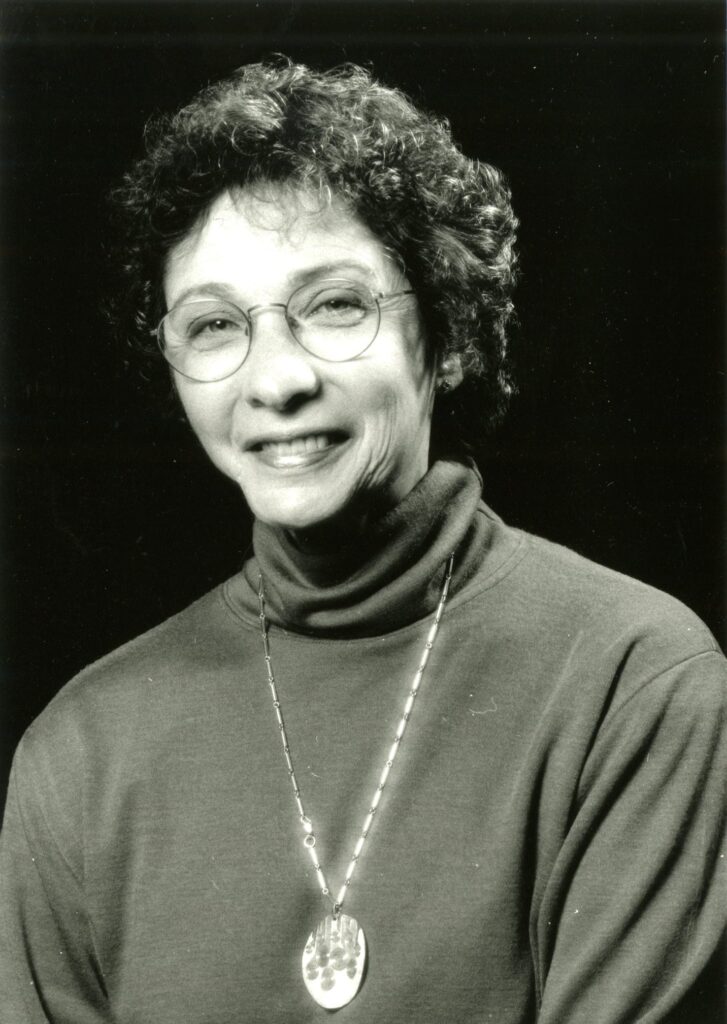
Note from Our Founder honoring Esther Thelen 1941-2004
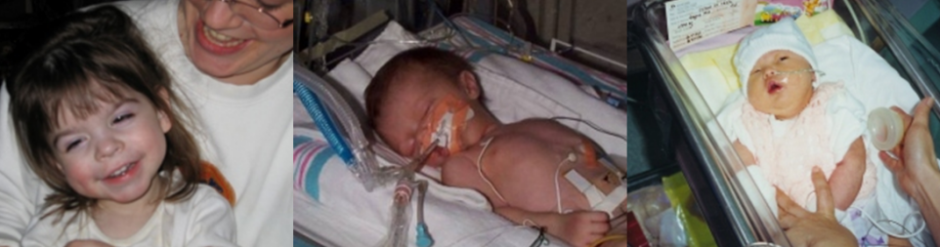
When my daughter Alissa suffered a severe global hypoxic brain injury in 2002, my world was upended. As a parent, I was desperate for answers. As an engineer, I was deeply frustrated by what I found. Mainstream medicine offered a bleak, static prognosis, treating the brain like a broken machine that could never be repaired. Meanwhile, the alternative therapy landscape was a confusing maze of emotional hype and unproven, expensive claims.
I refused to accept that nothing could be done. I believed back then—and still believe today—that the answers are out there, but no one was looking for them in the right way.
That search led me to an unexpected breakthrough: the work of Dr. Esther Thelen and her revolutionary Dynamic Systems Theory (DST).
The tribute below honors her monumental legacy. It explains the profound scientific framework she gave us—a framework that we have spent the last 24 years evolving from private phone calls with Esther into BRIGHT’s data-driven, AI-centered NeuroLoop Protocol. We invite you to read about the woman who helped us see that where there is a Dynamic System, there is always hope.
When Matt Palaszynski was navigating the devastating aftermath of his daughter Alissa’s global hypoxic brain injury in 2002, he found himself isolated in a medical landscape defined by rigid dogmas. Mainstream medicine viewed the injured brain as static, while the alternative therapy community often relied on unproven hype.
In this dark space, Matt did not just find a theory; he found an intellectual partner and a guide in Dr. Esther Thelen.
The Scientist, The Women: Approachable, Humble, and Logical
For a father armed with an engineering mindset, encountering Esther Thelen’s Dynamic Systems Theory (DST) was a revelation. But the true miracle was the woman behind the science. Despite being a world-renowned developmental psychologist, Dr. Thelen stepped out of the ivory tower. She spoke at length with Matt privately by phone, treating a determined father not as an outsider, but as a respected peer. [1] https://www.washingtonpost.com
In those conversations, Dr. Thelen was the epitome of a true scientist: deeply logical, exceptionally direct, completely open, and profoundly humble. She listened to Alissa’s specific challenges—the Apgars of 1 and 2, the basal ganglia calcification, the microcephaly—and did not offer false promises or dismissive pity. Instead, she offered her brilliant mind. She became a North Star, validating Matt’s conviction that the answers to brain injury rehabilitation were out there, waiting to be organized.
A Grand Theory of Development: Rewriting the Rules of Motor Development
Dr. Esther Thelen’s pioneering work fundamentally rewrote the rules of infant motor development, shifting the professional paradigm to view movement as a self-organizing process rather than a rigid, predetermined blueprint. While her revolutionary concepts became the absolute bedrock upon which the BRIGHT Foundation and cpcure.com were built, over time they also completely transformed the wider professional community, fundamentally reshaping how pediatric physical therapy, occupational therapy, and neuro-rehabilitation are taught and practiced globally. [2] https://www.researchgate.net
- The “Softly Assembled” Movement: Dr. Thelen proved that motor skills are not rigidly hardwired commands dictated by a broken brain. Instead, movement is “softly assembled” on the fly, emerging dynamically from a complex interplay of the mind, body mechanics, and the surrounding environment.
- Decoding the “Stable Attractor” Trap: This was the breakthrough moment where Matt’s engineering background meshed perfectly with Thelen’s biology. They realized Alissa’s abnormal movement patterns weren’t just random defects; they were highly stable, optimized solutions (undesirable “stable attractors”) that her body had settled into to survive.
- The Mandate to Destabilize: Dr. Thelen provided the logical framework for true intervention. To break an abnormal movement pattern, passive therapy is not enough. You have to actively destabilize that bad stable pattern by introducing intense, focused, and motivating opportunities, forcing the nervous system to self-organize into a new, functional pattern.
Stable Attractor: Integrating the Great Minds under Thelen
While Matt consulted a brilliant constellation of scientists, it was Dr. Thelen’s overarching philosophy that unified them all:
- It gave context to Nathan Urban’s emphasis on self-motivation and the natural sequence of learning—proving that the child’s own intent is a critical variable in the system.
- It validated Mike Merzenich’s and Ed Taub’s work on intense neuroplastic training and constraint-induced therapy, framing them as tools to forcefully destabilize bad habits.
- It connected to Neville Hogan’s robotic assistance and Beverly Ulrich’s treadmill gait training for Down Syndrome, proving that focused, data-driven physical assistance could disrupt stable attractors.
- It put Doug Kondziolka’s stem cell work into perspective—proving that “hardware” (new cells) is meaningless without the “software” (Thelen’s dynamic behavioral learning) to teach those cells how to function.
The Living Legacy: From 2002 to 2026
Dr. Esther Thelen passed away in late 2004, but her spirit and her interactions with Matt completely shaped the trajectory of cerebral palsy research over the next quarter-century.
In 2002, Matt’s greatest heartbreak was his inability to isolate and measure the complex variables driving Alissa’s stable attractors. In the 2002 BRIGHT Brain Injury Manifesto Matt wrote, “I am not sure how to go about identifying, isolating and measuring the critical variables.”
By 2026, cpcure.com is building the answer. The foundation’s modern NeuroLoop™ Protocol and AI-driven data tracking are the direct technological evolution of Dr. Thelen’s vision. What started as private, respectful phone calls between a grieving, brilliant father and a humble, pioneering scientist has grown into a global platform that measures those exact variables, stripping away emotional hype to map predictive, dynamic treatment paths.
Dr. Esther Thelen did not just study development; she developed a lifeline for families who refused to give up, and her monumental impact is permanently etched into the global standard of care and every milestone these children achieve.