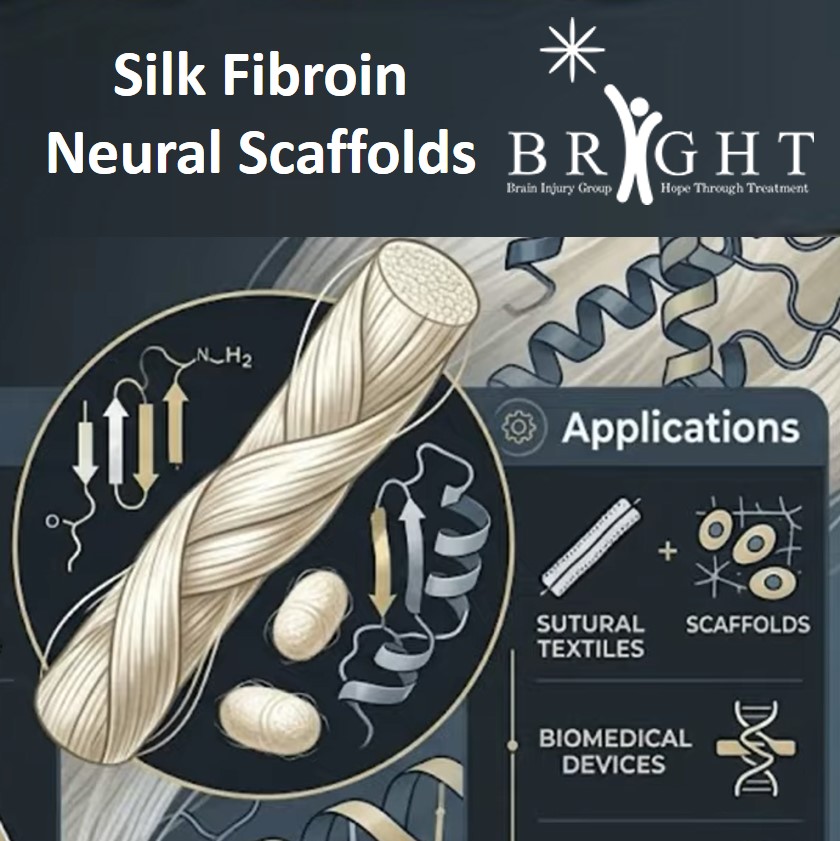
A comprehensive search of this week’s studies identified 34 new texts. Similar to recent weeks, there were zero true Additive results capable of expanding the core framework of the NeuroLoop Protocol. Instead, the literature falls within the Supportive and Legacy perimeters. While Study 34 (Zheng et al.) investigates silk fibroin-based biomaterials for direct neural repair—technically meeting the criteria for “Additive” to UPDATE —its highly invasive surgical profile de-prioritizes it for cerebral palsy care.
Executive Summary: 34-Studies-Horizon Filter Evaluation Week 25, June 15th, 2026
Silk Fibroin (SF) scaffolds and conduits are generally invasive, requiring surgical implantation or localized injection directly into the injured neural tissue.
While BRIGHT’s NeuroLoop protocol focuses on non-invasive or minimally invasive delivery methods (like intravenous or intrathecal delivery of stem cells and exosomes that can target the brain), biomaterials like Silk Fibroin requires a surgical bore hole.
Brain Delivery : Invasive Spectrum Comparison
🔴 Invasive (Surgical Implant): Formats like nerve conduits, 3D porous scaffolds, and patches must be surgically placed directly at the injury site. For peripheral nerve injuries or localized spinal cord gaps, a surgeon must physically bridge the structural defect using the SF material.
🟡 Minimally Invasive (Localized Injection): Formats like SF hydrogels can be formulated as shear-thinning liquids. This allows them to be injected via a syringe directly into a lesion cavity (e.g., a traumatic brain injury site or stroke cavity), where they gel in situ. While less invasive than open surgery, it still requires localized needle penetration into the tissue.
🟢 Non-Invasive (BRIGHT’s Current Target): Intravenous or target-seeking exosomes designed to cross the blood-brain barrier require only a standard IV line, carrying no risk of secondary mechanical trauma to the central nervous system.
Question 1: Can BRIGHT’s UNLOCK approach using non-invasive delivery of exosomes modify the microenvironment without any biomaterial carrier?
Yes, engineered exosomes can completely remodel and modify the neural microenvironment without a biomaterial carrier. They achieve this by delivering specialized biological cargo (proteins, miRNA, and neurotrophic factors like BDNF) directly into recipient cells, altering their behavior chemically and genetically rather than physically. [1, 2, 3, 4, 5]
Exosomes modify the environment by:
- Deactivating Inflammation: Shifting pro-inflammatory M1 microglia (which secrete tissue-damaging chemicals) into pro-regenerative M2 microglia. [6, 7, 8, 9, 10]
- Enzymatic Degradation of Scar Tissue: Stimulating cells to secrete matrix metalloproteinases (MMPs). These enzymes digest the inhibitory chondroitin sulfate proteoglycans (CSPGs) that form glial scars, essentially “clearing the road” for nerve growth. [11, 12]
- Promoting Angiogenesis: Signaling local endothelial cells to construct new blood vessels, restoring oxygen and nutrient flow to the injured microenvironment. [13, 14, 15]
Question 2: Can BRIGHT achieve 80–90% of what SF does using other non-invasive methods?
Yes, BRIGHT can achieve roughly 80–90% of the therapeutic outcome of Silk Fibroin (SF) through non-invasive means—provided there is no massive structural gap in the tissue (as typically seen in SCI).
When BRIGHT achieves 80–90% (Diffuse/Non-structural Injuries)
In disorders like Cerebral Palsy, ischemic stroke, or Traumatic Brain Injury (TBI), the tissue microenvironment is chemically hostile, but the physical pathways are mostly intact. By utilizing non-invasive delivery methods—such as intranasal delivery to bypass the blood-brain barrier: [16, 17, 18]
- BRIGHT’s exosomes match SF’s ability to lower inflammation.
- They match SF’s ability to promote axonal sprouting (via neurotrophic loading).
- Result: They achieve almost the entire therapeutic goal completely non-invasively. [1, 6, 13, 17]
When BRIGHT’s Neuroloop Protocol cannot achieve it (Structural Cavities & Gaps)
If there is a large physical gap (e.g., a completely transected spinal cord or a literal cavity from a severe hemorrhagic stroke), exosomes cannot bridge the empty space. Axons cannot grow across thin air; they require a physical matrix to walk along. In these specific structural scenarios, non-invasive molecular signals alone fail because they lack the physical 3D “highway” that SF provides.
Question 3: Can SF be adapted to intranasal delivery pathways?
Yes, Silk Fibroin has been successfully adapted for intranasal (nose-to-brain) delivery. However, it requires changing its physical form entirely from a structural scaffold into a nanoparticle or an intranasal patch. [6, 19, 20]
Recent breakthrough applications of intranasal SF include:
- Biomineralized SF Nanoparticles: SF can be processed into liquid nanocarriers. In study models, these nanoparticles successfully travel along the olfactory and trigeminal nerve pathways directly into the brain. They target areas like the hippocampus to deliver therapeutics, boost BDNF expression, and clear neuroinflammation without any systemic side effects. [6, 7, 16]
- Intranasal Conformal Patches: Researchers developed soft, moisture-responsive SF patches that adhere to the inside of the nasal cavity. As the silk slowly degrades, it steadily releases therapeutic compounds directly into the brain, eliminating the rapid clearance problems common with nasal sprays. [16, 19, 20]
The Trade-Off for Intranasal Nanoparticles:
If adapting SF into an intranasal nanoparticle or nasal patch, it preserves the non-invasive priority of the protocol. The catch is that it completely sacrifices SF’s macroscopic scaffolding capabilities. It acts purely as a highly efficient protective vehicle to help drugs or exosomes target the brain, rather than a physical structural bridge. [6, 16, 18, 20, 21]
Supportive Studies:
Four additional studies serve as Supportive validations for Step Zero and early-stage systemic stabilization. Studies 25, 32, and 33 reinforce the primary biological and metabolic baselines necessary to prepare for stable neuro-developlement. Specifically, Study 25 maps precise blood biomarker profiles and prenatal risk factors in preterm newborns, cementing the molecular tracking timelines required to identify early neural injury. This early diagnostic window is augmented by Study 32, which tracks the systemic neurodevelopmental impacts of prenatal antibiotic treatment to mitigate early inflammatory risks, and Study 33, which utilizes propensity score matching to show how non-emergency red blood cell transfusions alter long-term neurological outcomes by optimizing early systemic oxygenation. Together, these studies validate the mandatory systemic and metabolic baselines required before it is possible for repair.
| Status | Core Finding & Target Module | PMID / Source |
| Additive (Low Priority) | Study 34 (Zheng et al.) ➔ Targets Neural Repair: Evaluates silk fibroin-based biomaterials for direct neuroregeneration and structural tissue bridging; however, its highly invasive surgical profile deprioritizes it for cerebral palsy where non-invasive BRIGHT protocols can achieve functional rewiring without surgical morbidity. | PMID: 42261626 |
| Supportive | Study 25 (Tang et al.) ➔ Supports STEP ZERO (Biomarker Profiles & Early Identification): Maps unique blood biomarker profiles and prenatal risk factors in preterm newborns, validating the molecular tracking timelines required to identify early neural injury and prime infants for targeted protective interventions. | PMID: 42275955 |
| Supportive | Study 32 (Gudnadottir et al.) ➔ Supports STEP ZERO (Systemic Stabilization & Prenatal Mitigation): Evaluates the impact of prenatal antibiotic treatments for Group B Streptococcus on neurodevelopmental outcomes, providing critical biological data to mitigate early systemic inflammatory risks that compromise neurological baselines. | PMID: 42277301 |
| Supportive | Study 33 (Coignard et al.) ➔ Supports STEP ZERO (Metabolic & Systemic Optimization): Utilizes propensity score matching to prove that non-emergency red blood cell transfusions in preterm infants impact school-age neurodevelopmental outcomes, validating clinical protocols that optimize early systemic oxygenation. | PMID: 42262600 |
| Legacy | Studies 1 & 12 (Sala / Cruz-Sanabria et al.) ➔ Targets Upper Extremity & Cortical Tracking: Documents 3D motion differences in unilateral CP and links structural brain lesions to action observation therapy outcomes, categorizing these as standard descriptive and observational motor tracking metrics. | PMID: 42251653 PMID: 42255465 |
| Legacy | Studies 2, 3, 14, 18, 20, 21 & 26 (Dev Med Child Neurol / Ryan / García-Hernández / Harvey / Nagabhushan / Tokushima / Tunalı) ➔ Targets Symptomatic & Comorbidity Management: Manages secondary complications including TMJ disorders, adult musculoskeletal health, esophagogastric dysfunction post-Nissen fundoplication, localized pain puzzles, sleep disturbances, drug-induced hyponatremia, and dental caries burden. | PMID: 42286820 PMID: 42281159 PMID: 42281477 PMID: 42267853 PMID: 42260764 PMID: 42252937 PMID: 42262716 |
| Legacy | Studies 4, 7, 8, 11 & 19 (Yılmaz / Tardif / Hameeduddin / Eldred / Mahmoud) ➔ Targets Traditional & Adjunct Therapies: Investigates sensory integration therapy, non-invasive brain stimulation for gait, error-targeted phase adaptation for crouch gait, intensive personal training (RIPT), and lung trainers versus spirometers to handle symptoms without correcting the primary central pathology. | PMID: 42267458 PMID: 42263375 PMID: 42258374 PMID: 42261757 PMID: 42261915 |
| Legacy | Studies 5, 6 & 10 (Horata / Gasavi Nezhad / Ergün) ➔ Targets Functional Assessment & Orthotics: Tests the reliability of the foot tapping test, systematic reviews of ankle-foot orthoses (AFOs) on postural control, and the 1-minute sit-to-stand test as a shorter alternative to the 6-minute walk test. | PMID: 42268643 PMID: 42267052 PMID: 42264886 |
| Legacy | Studies 9, 22 & 27 (Dev Med Child Neurol / Ma / Jiang) ➔ Targets Diagnostics & Consensus Frameworks: Covers telehealth-delivered Hammersmith Infant Neurological Examinations (HINE), machine learning models for intellectual disability prediction, and the Chinese expert consensus on diagnostic definitions. | PMID: 42286813 PMID: 42268238 PMID: 42285613 |
| Legacy | Studies 13, 15, 16 & 17 (Gomes / Verreydt / Retkowska-Tomaszewska / Dilber) ➔ Targets Standard Medical & Nutritional Care: Reviews hybrid stitch gastrostomy closures, smartphone-tracked nutritional intakes, selection criteria for invasive intrathecal baclofen pumps, and mid-upper arm circumference Z-scores for pediatric neurology nutritional metrics. | PMID: 42282884 PMID: 42285221 PMID: 42278952 PMID: 42269926 |
| Legacy | Studies 23, 24, 28, 29, 30 & 31 (Dev Med Child Neurol / Khan / Abdigapbar / Fogel / Fortune / Czencz) ➔ Targets Socio-Demographics & Qualitative Quality of Life: Documents school attendance in Brazil, South Asian child mortality shifts vs. disability rates, transitional nursing experiences, parent perspectives on patient autonomy, adult care transitions, and wheelchair physical activity preferences. | PMID: 42286822 PMID: 42286434 PMID: 42281951 PMID: 42281151 PMID: 42277597 PMID: 42252090 |
Technical Glossary: Additive & Supportive Mechanisms
- Silk Fibroin (SF) Biomaterials: A biocompatible, biodegradable protein polymer scaffold derived from silkworm cocoons. Used as a structural bridge to physically guide axonal regrowth in severe, structural tissue voids like severed nerves. [1, 2]
- Neural Repair / Neuroregeneration: The biological process of rebuilding, regrowing, or structurally bridging damaged neural tissues, circuits, or cellular structures to restore lost neurological function.
- Step Zero: The mandatory foundational phase of the BRIGHT Protocol focused entirely on stabilizing internal physiology, optimizing systemic baselines, and clearing biological barriers (e.g., airway patency, inflammation) before initiating neuroplastic stimulation.
- Biomarker Profiles: Quantifiable molecular or biochemical signatures found in blood or tissue samples that serve as early indicators of underlying neural injury, cellular stress, or systemic pathology.
- Systemic Stabilization: The therapeutic optimization of a patient’s entire internal environment—including respiratory, metabolic, inflammatory, and circulatory systems—to create an ideal baseline for therapeutic interventions.
- Propensity Score Matching (PSM): A statistical technique used in clinical studies to estimate the true effect of a treatment by accounting for and balancing the covariates that predict receiving the treatment, mimicking a randomized controlled trial. [3, 4, 5]
[1] https://pmc.ncbi.nlm.nih.gov
[2] https://www.sciencedirect.com
[4] https://www.wallstreetmojo.com
[5] https://www.causalmlbook.com
| PREVIEW OF June 15th, 2026 Research | PMID |
| 34.Engineering Silk Fibroin-Based Biomaterials for Neural Repair Lan Zheng, Li He, Mengting Liu, Xiuling He, Yifan Wang, Xiaocheng Wang, Liangle Liu, Lei Yang Adv Mater. 2026 Jun 9:e73651. Online ahead of print. PMID: 42261626 | 42261626 |
| 1.Three-dimensional motion analysis of upper extremity movements: a review of the differences in children with unilateral cerebral palsy and typically developing children Debra A Sala Dev Neurorehabil. 2026 Jun 7. Online ahead of print. PMID: 42251653 | 42251653 |
| 2.Temporomandibular joint disorder and gross motor function in children with cerebral palsy No authors listed Dev Med Child Neurol. 2026 Jun 12. Online ahead of print. PMID: 42286820 | 42286820 |
| 3.Musculoskeletal health among adults with cerebral palsy: A systematic review Jennifer M Ryan, Jessica Burke, Rachel Byrne, Emily Capellari, Christina M Marciniak, Maram Sofiany, Reuel Jalal, Mark Peterson; Adult CP Clinical Practice Guideline Working Group Dev Med Child Neurol. 2026 Jun 11. Online ahead of print. PMID: 42281159 | 42281159 |
| 4.Rewiring the Senses: The Impact of Sensory Integration Therapy on Balance and Cognition in Cerebral Palsy Hande Yılmaz, Feyza Şule Badıllı Hantal Occup Ther Int. 2026;2026(1):e3715445. PMID: 42267458 | 42267458 |
| 5.Assessing the validity and reliability of the foot tapping test in children with spastic cerebral palsy Erdal Horata, Emel Taşvuran Horata, Özge Yenilmez, Suat Erel Physiother Theory Pract. 2026 Jun 10:1-11. Online ahead of print. PMID: 42268643 | 42268643 |
| 6.The Effect of Ankle-Foot Orthoses and Their Characteristics on Balance, and Postural Control in Children With Cerebral Palsy: A Systematic Review Zeinab Gasavi Nezhad, Amir Reza Vafayi, Mokhtar Arazpour Health Sci Rep. 2026 Jun 7;9(6):e72613. eCollection 2026 Jun. PMID: 42267052 | 42267052 |
| 7.Effects of non-invasive brain stimulation on gait and corticospinal plasticity in children and adolescents with cerebral palsy: A systematic review Mathilde Tardif, Cloé Dussault-Picard, Inès Toubal, Denis Arvisais, Sarah Lippé, Yosra Cherni Neurophysiol Clin. 2026 Jun 9;56(3):103174. Online ahead of print. PMID: 42263375 | 42263375 |
| 8.Increasing error at targeted phase of gait facilitates motor adaptation for improving crouch gait in children with cerebral palsy Iram Hameeduddin, Shijun Yan, Hyosok Lim, Chiara Carratta, Weena Dee, Renee Keefer, Velarie Pech, Ana-Marie Rojas, Ming Wu J Neurophysiol. 2026 Jun 8. Online ahead of print. PMID: 42258374 | 42258374 |
| 9.Telehealth Hammersmith Infant Neurological Examination and early diagnosis of cerebral palsy No authors listed Dev Med Child Neurol. 2026 Jun 12. Online ahead of print. PMID: 42286813 | 42286813 |
| 10.Functional Exercise Performance in Children with Cerebral Palsy: Is the 1-Minute Sit-to-Stand Test an Alternative to the 6-Minute Walk Test? Betül Ergün, Özge Baykan Çopuroğlu, Müge Baykan, Feyza Gürer, Hanife Abakay Phys Occup Ther Pediatr. 2026 Jun 9:1-16. Online ahead of print. PMID: 42264886 | 42264886 |
| 11.Community-Based Resistance Intensive Personal Training (RIPT) Program for Youth with Cerebral Palsy: A Prospective Cohort Pilot Study Karin Eldred, Candice Natrasony, Grace P S Kwong, Benjamin Norman, Lesley Pritchard, Elizabeth G Condliffe Phys Occup Ther Pediatr. 2026 Jun 9:1-15. Online ahead of print. PMID: 42261757 | 42261757 |
| 12.Structural brain lesions and action observation therapy outcomes in unilateral cerebral palsy: an exploratory study Francy Cruz-Sanabria, Elena Beani, Valentina Menici, Silvia Filogna, Paolo Bosco, Simona Fiori, Laura Biagi, Giuseppina Sgandurra Front Syst Neurosci. 2026 May 22:20:1766684. PMID: 42255465 | 42255465 |
| 13.Sealing the gap: a hybrid stitch approach to gastrostomy closure Plácido Gomes, Isabel Caetano, Diogo Simas, Ana Catarina Gomes, Carina Leal, Artur Antunes, Helena Vasconcelos VideoGIE. 2026 Jan 9;11(6):228-230. eCollection 2026 Jun. PMID: 42282884 | 42282884 |
| 14.Esophagogastric Dysfunction and Recurrent Symptoms in Neurologically Impaired Children with an Intact Nissen Fundoplication Carlos García-Hernández, Carlos Aguilar-Gutiérrez, Diego Leonardo Herrera-Ojeda, Lourdes Carvajal-Figueroa J Laparoendosc Adv Surg Tech A. 2026 Jun 12. Online ahead of print. PMID: 42281477 | 42281477 |
| 15.Nutritional intake in children with cerebral palsy and typically developing peers: A comprehensive study using a novel smartphone application Ineke Verreydt, Daisy Rymen, Lauraine Staut, Erika Vanhauwaert, Gitte Maes, Charlotte Lambrechts, Anja Van Campenhout, Kaat Desloovere, Els Ortibus Clin Nutr ESPEN. 2026 Jun 12. Online ahead of print. PMID: 42285221 | 42285221 |
| 16.Intrathecal Baclofen in Children with Cerebral Palsy: A Critical Review of Selection Criteria, Rehabilitation Goals, Outcomes, and Complications Natalia Retkowska-Tomaszewska, Piotr Defort, Anna-Maria Barciszewska, Dariusz Patkowski J Clin Med. 2026 May 25;15(11):4091. PMID: 42278952 | 42278952 |
| 17.Age-Dependent Diagnostic Performance of Mid-Upper Arm Circumference Z-Score in Pediatric Neurology: A Multicenter Study with a Cerebral Palsy Subgroup Beril Dilber, Burcu Parıltan Küçükalioğlu, Hasan Emral, Ali Cansu, Sevim Şahin, Emine Tekin, Betül Diler Durgut, Pınar Özkan Kart, Fatma Hanci, Gülnur Esenülkü, Tuba Bulut, Esra Özpinar, Betül Kiliç, Yasemin Topçu, Kürşad Aydin, Zeynep Öz Dağdelen, Gülcan Akyüz Yücel, Müge Baykan, Huriye Çetin, Elif Nalan Taş, Ebru Petek Arhan, Ercan Demir, Rabia Tütüncü Toker, Tuğba Doğanç, Dilek Türkmen, Hüseyin Per, Müge Ayanoğlu, Tülay Kamaşak, Burcu Güven Clin Nutr ESPEN. 2026 Jun 10:103388. Online ahead of print. PMID: 42269926 | 42269926 |
| 18.Pain occurrence is one piece of the pain puzzle for children with cerebral palsy Adrienne Harvey Dev Med Child Neurol. 2026 Jun 10. Online ahead of print. PMID: 42267853 | 42267853 |
| 19.Lung Boost Trainer Versus Incentive Spirometer on Pulmonary Function Post COVID Hemiplegic Cerebral Palsy Children; Randomized Controlled Trial Amira G Mahmoud, Faten M Hassan, Mai A Eid, Yasmine S Elkhateeb, Doaa A Adel Aziz, Ghada S Hussein, Mai M Ahmed Physiother Res Int. 2026 Jul;31(3):e70234. PMID: 42261915 | 42261915 |
| 20.Sleep health of adults with cerebral palsy: A systematic review Deepika Nagabhushan, Caleb Kim, Daniel G Whitney, Rita Ayyangar, Angeline Bowman, Sonia Sharma, Maxwell S Barnish, Daniel Whibley Dev Med Child Neurol. 2026 Jun 8. Online ahead of print. PMID: 42260764 | 42260764 |
| 21.Hyponatraemia in Patients With Severe Motor and Intellectual Disabilities: Possible Role of Antiseizure Medications Miyoko Tokushima, Goro Yokota, Chika Ueno, Yukiko Inada, Kumiko Jinnouchi, Miki Nakanishi, Shuichi Yamamoto J Intellect Disabil Res. 2026 Jun 8. Online ahead of print. PMID: 42252937 | 42252937 |
| 22.An Interpretable Machine Learning Model for Predicting Intellectual Disability in Children With Cerebral Palsy Deyou Ma, Yiwen Wang J Intellect Disabil Res. 2026 Jun 10. Online ahead of print. PMID: 42268238 | 42268238 |
| 23.School attendance in individuals with cerebral palsy in Brazil No authors listed Dev Med Child Neurol. 2026 Jun 12. Online ahead of print. PMID: 42286822 | 42286822 |
| 24.Increased childhood disability and reduced overall child mortality in South Asia Md Nuruzzaman Khan, Atika Rahman Chowdhury, Shimlin Jahan Khanam, Israt Jahan, Mohammad Muhit, Sarah Mcintyre, Nadia Badawi, Gulam Khandaker Dev Med Child Neurol. 2026 Jun 12. Online ahead of print. PMID: 42286434 | 42286434 |
| 25.Risk factors and blood biomarker profiles of children diagnosed with cerebral palsy in a Danish cohort of preterm newborns Man-Hung Eric Tang, Ulrik Lausten-Thomsen, Marc Stegger, Kristin Skogstrand, Nis Borbye-Lorenzen Early Hum Dev. 2026 Jun 4:221:106602. Online ahead of print. PMID: 42275955 | 42275955 |
| 26.Caries burden and high-risk subgroups in children and adolescents with cerebral palsy in Türkiye Esra Tunalı, Şeniz Karaçay, Arda Tabancalı, Büşra Seda Yavuz, Ersin Yıldırım, Turgay Arık Eur Arch Paediatr Dent. 2026 Jun 9. Online ahead of print. PMID: 42262716 | 42262716 |
| 27.Chinese expert consensus on the diagnostic definition of cerebral palsy Wei Jiang, Dengna Zhu, Xiang Tang, Kaishou Xu, Changlian Zhu, Nong Xiao; Members of the Expert Group BMJ Paediatr Open. 2026 Jun 12;10(1):e004217. PMID: 42285613 | 42285613 |
| 28.Nurses’ experiences in pediatric cerebral palsy care: Insights from a transitional health system Nursultan Abdigapbar, Ejercito Balay-Odao, Joseph Almazan J Taibah Univ Med Sci. 2026 Jun 1;21(3):548-558. eCollection 2026 Jun. PMID: 42281951 | 42281951 |
| 29.Helping my child with cerebral palsy graduate from passenger to pilot: A parent’s perspective Lynne Fogel Dev Med Child Neurol. 2026 Jun 11. Online ahead of print. PMID: 42281151 | 42281151 |
| 30.Transition to adulthood: Perspectives from young people with cerebral palsy, parents, and health professionals Jennifer Fortune, Jennifer M Ryan, Aisling Walsh, Michael Walsh, Claire Kerr, Thilo Kroll, Grace Lavelle, Mary Owens, Owen Hensey, Meriel Norris Dev Med Child Neurol. 2026 Jun 11. Online ahead of print. PMID: 42277597 | 42277597 |
| 31.Participation in community-based physical activity: a qualitative study of the wants and needs of adults with cerebral palsy who use wheelchairs James Czencz, Margaret Wallen, Peter H Wilson, Douglas G Whyte, Christine Imms, Gaurav Thakkar, Nora Shields Disabil Rehabil. 2026 Jun 7. Online ahead of print. PMID: 42252090 | 42252090 |
| 32.Group B Streptococcus antibiotics treatment during pregnancy and the risk of four neurodevelopmental outcomes in Swedish children Unnur Gudnadottir, Sheila Orwa, Thi Cam Tu Ha, Martin J Blaser, Sandra Guedes, Kelle Moley, Anders Elfvin, Kristin Wannerberger, Nele Brusselaers Sci Rep. 2026 Jun 11;16(1):18192. PMID: 42277301 | 42277301 |
| 33.School-age neurodevelopmental outcomes after non-emergency red blood cell transfusions in preterm infants: a propensity score-matched study from the Epipage 2 cohort Maxime Coignard, Laetitia Marchand-Martin, Elsa Kermorvant-Duchemin, Gilles Cambonie, Barthélémy Tosello, Pierre-Yves Ancel, Héloïse Torchin, Isabelle Guellec Eur J Pediatr. 2026 Jun 9;185(7):482. PMID: 42262600 | 42262600 |
Creator Credentials
Author: Matt Palaszynski
- Founder, BRIGHT Foundation: Leading a global initiative to “close the loop” on Cerebral Palsy recovery through data-driven research.
- 25+ Years Lived Experience: Navigating life with a daughter with CP provides a primary, first-person understanding of the physiological and clinical gaps in current care models.
- GE Alumnus & Business Leader: Leveraging decades of experience in operational excellence, complex systems, and strategic leadership to apply rigorous meta-study frameworks to neurological research.
- Methodology: Combines personal advocacy with professional systems-thinking to synthesize NCBI PubMed data into the actionable NeuroLoop Protocol.
Conflict of Interest Statement
The BRIGHT Foundation and its founder, Matt Palaszynski, maintain no commercial or business interests in the medical technologies, pharmaceutical products, or clinical services discussed on this page.
- Non-Profit Mission: Our objective is purely research-driven, aimed at identifying the most effective paths to a functional cure.
- Independence: No funding is received from manufacturers of the devices or therapies reviewed in our weekly meta-studies.
- Transparency: All citations are linked directly to PubMed (PMIDs) to ensure users can verify the raw data independently.
[3] https://www.sciencedirect.com
[4] https://pmc.ncbi.nlm.nih.gov
[5] https://www.sciencedirect.com
[6] https://pubmed.ncbi.nlm.nih.gov
[7] https://www.sciencedirect.com
[8] https://www.sciencedirect.com
[9] https://pmc.ncbi.nlm.nih.gov
[10] https://www.sciencedirect.com
[11] https://pmc.ncbi.nlm.nih.gov
[12] https://www.sciencedirect.com
[13] https://www.sciencedirect.com
[14] https://pmc.ncbi.nlm.nih.gov
[15] https://pmc.ncbi.nlm.nih.gov
[16] https://pubmed.ncbi.nlm.nih.gov
[18] https://pmc.ncbi.nlm.nih.gov
[19] https://pubs.acs.org