The Decentralized Nervous System: A Tectonic Realignment in Neuro-Rehabilitation
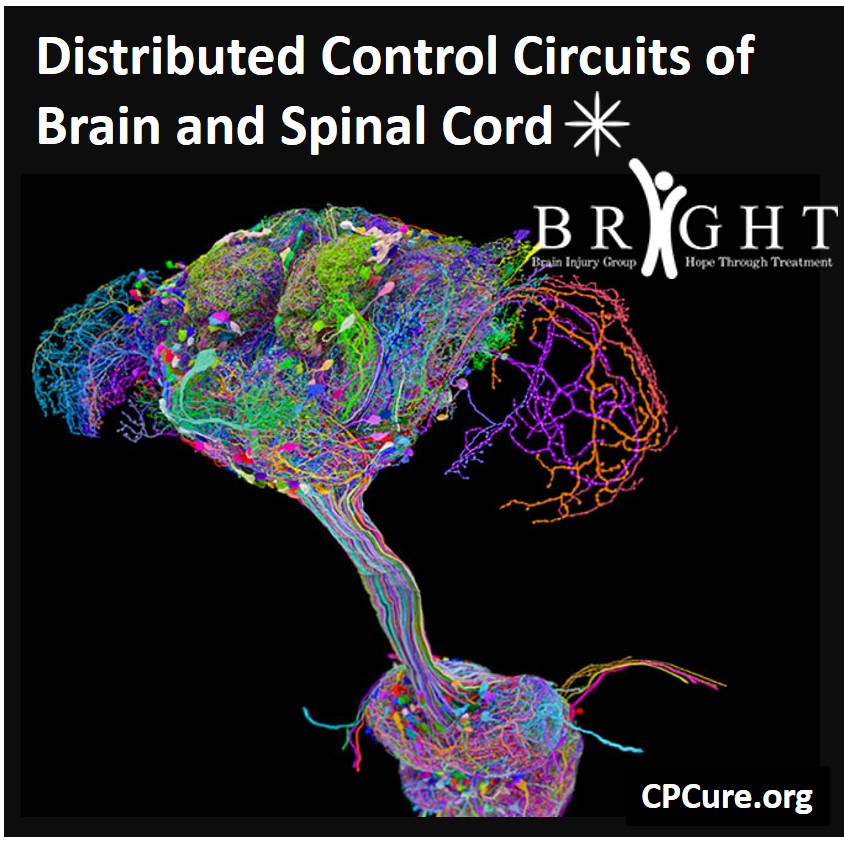
BRIGHT believes that the June 2026 publication of “Distributed control circuits across a brain-and-cord connectome“ in Nature (Bates et al. PMID 40766407) marks a pivotal, irreversible shift in developmental neuroscience. It provides the physical evidence for a truth that pioneering minds have sensed for over a century: that the historical model of “centralized, top-down command” has been wrong all along.
We can move and think faster than the blink of an eye. This happens because local circuits—like those in the hand or the leg—act largely independently from the brain and in parallel with each other. The body only relies on the brain for small nudges, rather than forcing it to manage the entire complex workload of moving, speaking, and thinking at the exact same time. This study’s result is profound and largely opposite of what mainstream neuroscience has assumed for a century.
Executive Summary: Horizon Filter Evaluation Week 28, July 6th, 2026
For generations, families and clinicians have assumed that the nervous system functions in a strict, top-down hierarchy. The brain was cast as an almighty micro-manager, issuing explicit commands to a passive spinal cord. To the surprise of many, this study permanently dismantles that model. It reveals that local feedback loops run their own physics based on immediate sensory inputs, while the brain stem and cortex act as high-level supervisors.
Consider a child’s leg instantly stabilizing against a sudden trip, this is called a Local sensory-motor loop. It operates like a ball naturally settling at the lowest point of a bowl, instantly locking into balance without needing a single command from above. Instead of micromanaging these physical reactions, the higher brain regions, like the cortex, act as strategic directors that tilt the entire bowl to steer the overarching journey toward a new destination, leaving the second-by-second mechanics to handle themselves.
Why this study is groundbreaking:
- For Parents: It offers profound hope. It means a damaged brain doesn’t have to relearn how to control every microscopic movement. We can target and exploit the body’s built-in, local physics to bypass injured areas.
- For Therapists & Doctors (PT/OT): It validates why hands-on, body-in-environment therapies work. Rehab isn’t just about rewiring the cortex; it is about reshaping the “bowl” so the local loops can settle into healthy patterns naturally.
- For Donors: It proves that funding BRIGHT isn’t just funding incremental science—it is funding a paradigm shift. BRIGHT’s NeuroLoop Protocol replaces the old, broken “top-down computer” model of the central nervous system with a dynamic, highly efficient blueprint for modern neuro-rehabilitation.
This discovery does not upend the BRIGHT 11-Step NeuroLoop Protocol; it acts as an a priori validation of BRIGHT’s core thinking. It bridges the gap between historical clinical intuition (such as Leonid Blyum’s Diaphragmatic Manual Therapy), Dr. Esther Thelen and her revolutionary Dynamic Systems Theory (DST), and raw physical anatomy, providing a unified foundation where every major branch of rehabilitation finally finds its place.
1. Historical Foundations: The Mechanical Self-Righting System
The connectome data maps a profound biological reality down to the individual synapse: movement emerges from the interaction of self-righting mechanical systems with gravity. This discovery honors and unites the life’s work of the field’s greatest historical pioneers.
The Decerebrate Cat (Sherrington/Brown, 1910s): This journey began with a startling revelation. When an animal’s brainstem was surgically severed—disconnecting its conscious mind entirely—it could still walk with near-perfect mechanical precision on a treadmill. The moment its hip flexors were stretched by the moving belt, the local spinal circuits automatically triggered a stride. The limb was not processing cognitive thought; it was a physical system seeking its lowest energy state, like a marble settling at the bottom of a U-shaped rail (an Attractor State).
Decades later, legendary researchers at MIT (Neville Hogan) and the Chicago School (Mussa-Ivaldi) (The Rehabilitation Institute of Chicago, now the Shirley Ryan AbilityLab) translated this phenomenon into beautiful mathematics. They proved that the spinal cord houses a pre-wired geometric map, what Chicago’s Mussa-Ivaldi calls “Convergent Force Fields”. The higher brain centers do not calculate individual muscle fiber contractions; they simply select a mechanical “bowl,” and the natural tension of the body pulls the limb into place. The 2026 Nature study gives us the precise physical wiring diagram for these long-hypothesized shapes.
The researchers at the Chicago Movement Lab discovered that if you stimulate a specific cluster of interneurons in the spinal cord, the limb will move to a highly specific point in space and stay there, resisting any attempt to push it away.
If you pull the leg forward, it snaps back to that spot. If you push it backward, it snaps forward to that exact spot. The math behind this looks like a funnel or a bowl: no matter where you drop a marble inside the bowl, it rolls down to the exact same center point. They called these geographic balance points “convergent force fields.”
Translating the Jargon to BRIGHT’s Language: BRIGHT bypasses the academic gatekeeping by calling these what they actually are: Biomechanical Attractor States or Neutral Mechanical Baselines.
The spinal cord does not compute complex X-Y-Z coordinates for every muscle. It contains a pre-wired set of mechanical “bowls.” When the nervous system wants to move a leg, the brain doesn’t tell every muscle how much to contract; it simply selects a different “bowl” (attractor state), and the physical tension of the muscles automatically pulls the limb into that new shape.
2. Deepening Step ZERO: The Indivisible Visceral-Motor Circuit
Traditional therapy has historically treated the gut, the airway, and the autonomic nervous system as separate medical concerns, completely divorced from motor training. The connectome study delivers an astonishing structural correction to this siloed approach: Single ascending and descending neurons are physically co-wired to simultaneously activate skeletal movement and the specific visceral (heart, lungs, stomach, and diaphragm) or endocrine (hormones like adrenaline or cortisol) organs that support that movement.
This updates the fundamental “Why” behind Step ZERO (The NeuroLoop Stability Index) from clinical intuition into an absolute neuro-anatomical law:
- The Shared Pathway: Visceral stability is not just about ensuring a child is rested or free from discomfort. If a child’s airway is restricted, or their digestive system is in distress, the shared long-range behavioral circuit is physically occupied by survival signals.
- The Gatekeeper Effect: The brain cannot cleanly broadcast a learning intention down a pathway that is already screaming with visceral survival mechanics. True structural adaptation and neural sprouting cannot take hold until Step ZERO stabilizes the background storm and clears the line.
3. The 90% Problem: Sifting Through the Sub-Cortical Storm
In children with Hypoxic-Ischemic Encephalopathy (HIE), a stiff joint or a tight tendon is merely the visible debris of a deeper, hidden battle: unfiltered, high-volume sub-cortical white noise blasting down from injured deep-brain centers. This relentless electrical static floods the spinal cord, forcing local loops into a permanent, rigid clamp (Spasticity) that eventually alters the physical geometry of the tissue (Contracture).
The global rehabilitation landscape is populated by brilliant, deeply dedicated scientific camps. Each has made monumental advancements within their narrow domains, yet each falls short by treating only a fraction of the global loop:
- Camps A & B (Focal Muscle Vibration & Spinal Cord Stimulation): Pioneered by groups like ONWARD Medical, these approaches apply high-frequency mechanical vibration or continuous electrical fields over the spine to flood the nerve gateways. They create a temporary oasis of functional silence by jamming the frequency (presynaptic inhibition). Their limitation is that they are passive; they open the gate but do not orchestrate the subsequent voluntary movement.
- Camp C (Patterned Electrical Neuromuscular Stimulation – PENS): Mastered by developers of functional electrical therapy, these systems use precise timing to trigger reciprocal inhibition loops, forcing spastic muscles to release. However, they fall short by ignoring the visceral foundation. They attempt to run an exquisite electrical program while the underlying biological platform is in an autonomic crisis.
- Camp D (The Phase-Dependent Perturbation Camp): Anchored by the elite roboticists at the Shirley Ryan AbilityLab, this camp utilizes advanced exoskeletons to inject sudden, unexpected mechanical pulses at the exact millisecond a limb switches phases. This physical crisis forces the spinal network to instantly drop its rigid defense and recalculate its balance. Their limitation is access: these world-class insights remain insulated inside multi-million-dollar academic research silos, far removed from a parent’s daily reality at home. However, BRIGHT is working on low complexity, mobile approaches that utilize this concept in our closed loop protocol.
4. The VectorDial™: Real-Time Smartphone Measurement Dashboard
The tragedy of the modern rehabilitation paradigm is not a lack of talent or devotion; it is the complete absence of a real-time scoreboard. Bound to population averages and legacy insurance requirements, families and researchers are forced to rely on static, 6-month observational tests like the GMFM. These scales are completely blind to the micro-seconds where real neurological change lives.
To unite these disparate labs and give families absolute clarity, we must step entirely out of the old testing framework and introduce an un-gatekept, real-time, N-of-1 physical instrument: The VectorDial™.
At the heart of the BRIGHT NeuroLoop is the CORE. A real-time, edge computing device that leverages the computer vision and infant auto-motion decoding engine highlighted in the Week 26 Horizon Filter article, Wearable Sensors highlighted in Week 20, eye tracking, and other real time Biomarkers. The VectorDial™ Dashboard strips away all clinical and academic jargon. It turns a standard smartphone into a living lens that displays a fundamental law of physics to a hopeful parent: the spontaneous emergence of undeniable order out of absolute chaos.
- The Instrument Interface: A clean, high-impact digital dashboard running on a parent’s phone. It does not judge or assign an arbitrary score; it acts like an honest speedometer or a diagnostic medical gauge.
- The Analysis Engine: The CORE software tracks raw infant movement, extracting continuous kinematic primitives—such as Jerky Movements (the rate of change of acceleration) and phase-space velocity transitions—mapping them onto a live coordinate field.
- The “Night and Day” Realization: When the 90% sub-cortical HIE noise is running rampant, the VectorDial™ displays a chaotic, high-entropy cloud of gray static. But the moment an intervention—whether a targeted visceral release from Step ZERO, a local vibration matrix, or a manual phase-dependent tap—successfully clears the line, the system predictability shifts instantly. Right before the parent’s eyes, the chaotic cloud collapses and organizes into a razor-sharp, glowing green geometric attractor ring.
The Horizon Filter View
The June 2026 Nature connectome paper provides the permanent scientific validation that BRIGHT’s focus on decentralized edge loops and autonomic stability was anatomically correct all along.
The VectorDial™ does not dismiss the brilliant work of the labs that came before BRIGHT; it will give them, and the parents who rely on them, the independent, real-time scoreboard they have been missing. Families will no longer have to wait months for an ambiguous assessment. They can watch the static clear, see the noise drop, and track the upward tilt of their child’s true evolutionary path, second by second.
Three studies from Week 28 confirm that simultaneously priming the brain and retraining local muscle loops constitutes the superior, evidence-based future of neuro-rehabilitation.
Study 1 (Özlü Erdoğan et al., PMID: 42398049) supports the BRIGHT NeuroLoop Protocol: SNYC Domain by validating that synchronized local electrical stimulation paired with active cognitive engagement drastically improves manual dexterity.
Concurrently, Study 17 (Chen et al., PMID: 42393577) and Study 19 (Huang et al., PMID: 42372249) support the BRIGHT NeuroLoop Protocol: PRIME Domain, proving that priming the higher brain centers with magnetic stimulation unlocks a highly receptive window for local mechanical loop training.
However, these sophisticated technologies fail to produce lasting, real-world recovery because they are trapped within a high-cost, clinic-bound paradigm. The immense complexity, bulk, and professional oversight required by these robotic frames, desktop sensors, and heavy magnetic coils make them completely impossible to integrate into a patient’s daily life.
This operational bottleneck restricts these powerful, multi-tier protocols to limited, 45-minute clinic sessions, leaving the patient’s remaining 23 hours a day unaddressed. To achieve true recovery, treatment must move beyond these heavy, tethered machines and transition to lightweight, continuous wearable systems that reshape physical function and manage local loop physics throughout the entire day.
CPCure.com Horizon Filter Week 28
| Status | Core Finding & Target Domain | Source / PMID |
|---|---|---|
| 🔴 Strongly Supportive (Clinic-Bound Only) | Study 1 (Özlü Erdoğan et al.) ➔ Supports BRIGHT Hand/Arm Domain: Integrates local NMES with Leap Motion VR. Concepts match perfectly, but wired hardware and desktop sensors are impossible for daily wear. | 42398049 |
| 🟡 Supportive | Study 2 (Choi et al.) ➔ Validates the “Stable Attractor” model: Proves that dystonic CP finger movements collapse into chaotic, high-entropy muscle synergies due to a failure in supervisor modulation. | 42397401 |
| ⚪ Legacy | Study 3 (Jiménez et al.) ➔ Focuses on standard orthopedic classifications and traditional tendon/muscle release concepts for the spastic thumb. | 42385884 |
| ⚪ Legacy | Study 4 (Van Nuffel & Degreef) ➔ A technical surgical guide for mechanical elbow contractures; manages the endpoint structural failure rather than the neural loop. | 42385881 |
| ⚪ Legacy | Study 5 (Bachy & Fitoussi) ➔ Traditional overview of upper limb spasticity in children using standard, top-down neurological definitions. | 42385880 |
| 🟡 Supportive | Study 6 (Hidalgo-Arcos & Jovellar-Isiegas) ➔ Supports environment-driven mapping: Highlights the necessity of cross-sectional upper limb tracking to identify where local loops fail during daily tasks. | 42371515 |
| ⚪ Legacy | Study 7 (Cacciola et al.) ➔ Standard scoping review of 24-hour movement and sedentary sleep behaviors in generalized developmental disabilities. | 42401958 |
| ⚪ Legacy | Study 8 (Khan et al.) ➔ Systematic review of salvage hip surgeries in non-ambulatory CP; addresses long-term structural collapse from unresolved spasticity. | 42383712 |
| 🟡 Supportive | Study 9 (Racis-Plantin et al.) ➔ Exposes the limits of brute-force tech: Proves Lokomat gait tech has structural limitations if used purely for repetition without targeting local loop physics. | 42381404 |
| ⚪ Legacy | Study 10 (Garabedian et al.) ➔ Traditional meta-analysis on managing secondary femur fractures in children with CP. | 42370877 |
| ⚪ Legacy | Study 11 (Owen) ➔ Commentary on the complexity of publishing high-level orthotic interventions within the legacy medical framework. | J Prosthet Orthot (2026) |
| 🟡 Supportive | Study 12 (Çopuroğlu et al.) ➔ Validates systemic alignment: Proves that immediate manual therapy and exercise alter cervico-mandibular mobility, shifting the global physical “bowl.” | 42381300 |
| ⚪ Legacy | Study 13 (Kurtuluş et al.) ➔ Observational data mapping traditional botulinum toxin (Botox) use to standard gross motor classification scores. | 42380558 |
| ⚪ Legacy | Study 14 (Khillan et al.) ➔ Scoping review tracking the prevalence and standard pharmaceutical management of neuropathic pain in CP. | 42393921 |
| ⚪ Legacy | Study 15 (Trivedi et al.) ➔ Retrospective cohort study on gastroschisis feeding protocols; outside the core motor connectome domain. | 42385792 |
| 🟡 Supportive | Study 16 (Nania et al.) ➔ Maps real-time loop disruption: Explores how daily diary pain spikes cause immediate, chaotic fluctuations in motor control and spasticity. | 42365702 |
| 🔴 Strongly Supportive (Clinic-Bound Only) | Study 17 (Chen et al.) ➔ Supports BRIGHT Cortical Supervisor Domain: Merges iTBS with virtual reality cycling. Concepts map perfectly, but heavy magnetic coils and stationary rigs restrict use to clinic walls. | 42393577 |
| 🟡 Supportive | Study 18 (Kretch et al.) ➔ Enables precision loop tracking: Uses wearable sensors in infants to map real-time physical trajectories and early local balance states. | 42379128 |
| 🔴 Strongly Supportive (Clinic-Bound Only) | Study 19 (Huang et al.) ➔ Supports BRIGHT Gait/Lower Limb Domain: Pairs robotic walking frames with rTMS. Excellent concept validation, but involves massive, immobile machinery. | 42372249 |
| ⚪ Legacy | Study 20 (El-Dwiny et al.) ➔ Cross-cultural validation study of the Egyptian-Arabic version of the ABILHAND-Kids questionnaire. | 42396765 |
| 🟡 Supportive | Study 21 (Karim et al.) ➔ Tracks connectome trajectories: Follows early neurological degradation in high-risk infants, showing when local loops begin to drift. | 42392608 |
| ⚪ Legacy | Study 22 (Enyama et al.) ➔ Hospital-based tracking study focused on traditional physiotherapy adherence rates and access barriers in Cameroon. | 42390827 |
| ⚪ Legacy | Study 23 (Traslaviña et al.) ➔ 10-year retrospective epidemiological study on shifting outpatient referral patterns in Brazil’s healthcare system. | 42378202 |
| ⚪ Legacy | Study 24 (Su et al.) ➔ Genetic variant and haplotype analysis looking for upstream X-chromosomal susceptibility markers for male CP. | 42399817 |
| ⚪ Legacy | Study 25 (Streur et al.) ➔ Instrument development study mapping the psycho-social worries of disabled transition-age female youth and mothers. | 42389668 |
| ⚪ Legacy | Study 26 (Stadskleiv et al.) ➔ Qualitative study analyzing parental perceptions of traditional neuropsychological assessments. | 42366583 |
| ⚪ Legacy | Study 27 (Parthiban et al.) ➔ Explores the interplay between neonatal APGAR scores and the gut microbiome; outside the motor loop framework. | 42399573 |
| 🟡 Supportive | Study 28 (Clifford et al.) ➔ Identifies initial system settings: Proves blood biomarkers in HIE predict the exact trajectory where the central connectome fails. | 42386129 |
| ⚪ Legacy | Study 29 (Sung et al.) ➔ Traditional RCT tracking the 2-year outcomes of standard ibuprofen interventions for patent ductus arteriosus. | 42381526 |
| 🟡 Supportive | Study 30 (Kuo et al.) ➔ Validates supervisor screening: Confirms the Hammersmith (HINE) global score acts as an early warning metric for supervisor tract failure. | 42375103 |
| ⚪ Legacy | Study 31 (Spinillo et al.) ➔ Umbrella review cataloging traditional antenatal and delivery risk factors without mapping mechanical connectome outcomes. | 42128358 |
| ⚪ Legacy | Study 32 (Fatemian et al.) ➔ Systematic review of caffeine impact on general neurodevelopment in preterm infants. | 41945073 |
Technical Glossary: Distributed Control & Kinematic Scoreboard Terminology
The following definitions cover the specific anatomical, mechanical, and computational terms introduced by the Nature connectome study and the VectorDial™ framework.
1. Anatomical & Systemic Infrastructure
- Visceral: Relating to the internal organs of the body contained within the thoracic and abdominal cavities (e.g., the lungs, stomach, intestines, and heart). In the context of motor access, visceral state dictates the baseline survival tone of the nervous system.
- Endocrine Cells: Specialized cells that release hormones directly into the bloodstream to regulate systemic metabolism, blood pressure, and tissue oxygenation. They provide the immediate biochemical support structure required to sustain voluntary muscle movements.
- Efferent Neurons: Motor and secretory nerve cells that carry electrical impulses away from the central nervous system toward peripheral muscles, organs, and glands to execute an action.
- Afferent Neurons: Sensory nerve cells that carry physical data (vibration, heat, pressure, muscle stretch) toward the spinal cord and brain, acting as the primary data stream for local control loops.
- Connectome: A comprehensive, high-resolution wiring diagram or map of every physical synaptic connection within an organism’s nervous system.
- Presynaptic Inhibition: A neurological mechanism where a sensory nerve terminal is chemically dampened before its signal can cross the synapse to the motor neuron. This effectively locks the gateway, preventing downstream static from triggering muscle contraction.
- Reciprocal Inhibition: A hardwired spinal reflex loop where the activation of a muscle group automatically sends a mandatory relaxation signal to the opposing (antagonist) muscle group.
2. Biomechanical & Control Systems Engineering
- Distributed Control Architecture: A decentralized engineering layout where autonomous local controllers manage specific machine components independently, while a central computer provides only high-level oversight.
- Edge Computing / Edge Processing: A data architecture where raw computing and decision-making happen at the absolute periphery of a network (the device or the limb) rather than waiting for commands from a centralized server (the brain).
- Attractor State: A stable geometric pattern or state toward which a dynamic physical system naturally settles and returns, even when perturbed or pushed off course by external forces.
- Convergent Force Field: A geometric map of physical equilibrium points within a limb’s workspace. No matter where the limb is placed, the field’s mechanical tension forces the limb to collapse toward a singular, predictable coordinate point.
- Phase-Dependent Perturbation: A timed physical force or mechanical drop injected at a highly specific microsecond within a movement cycle (the phase), forcing the local circuit to drop its current defensive state and recalculate balance.
- Error Augmentation: A rehabilitation mechanism where a robotic or physical force intentionally exaggerates a movement error for a split second, panicking the nervous system into firing its native, self-righting corrective loops.
3. Computational Geometry & Kinematic Metrics
- Phase-Space Coordinate Map: A multi-dimensional geometric space where every possible state of a moving system (e.g., a limb’s position, velocity, and acceleration) is plotted as a single coordinate point over time.
- Topological Entropy: A mathematical measure of the chaos, randomness, and unpredictability within a geometric data cloud. High entropy signifies unorganized white noise; low entropy signifies structured order.
- Lyapunov Exponent: A mathematical value that calculates the rate at which two slightly different movement paths diverge over time. A dropping exponent denotes that a system is becoming highly predictable, stable, and organized.
- Kinematic Primitives: The foundational mathematical building blocks of movement (such as acceleration profiles, trajectory directions, and velocity-step transitions) from which complex behaviors are assembled.
- Jerk: A physics metric calculating the rate of change of acceleration over time (the third derivative of position). High jerk profiles indicate spastic, erratic, and uncoordinated mechanical movements.
To proceed with organizing this technical stack, let me know if you would like to map these specific glossary terms directly onto the 11 steps of the protocol software architecture or draft the data logging parameters for the engineering team.
Citations
| Citation | PMID |
| 1.The Effects of Neuromuscular Electrical Stimulation and Leap Motion-Based Exercises on Hand Function Parameters in Children With Cerebral Palsy: Study Protocol for a Randomized Controlled Trial Hande Özlü Erdoğan, Gülay Aras Bayram, Sema Targıt Akbaşak, Devrim Tarakcı JMIR Res Protoc. 2026 Jul 3;15:e94705. PMID: 42398049 | 42398049 |
| 2.Changes in synergy formation and modulation during cyclic finger force production tasks in female adults with dystonic cerebral palsy Yoon-Seok Choi, Mukyeong Shin, Jee-Young Lee, Jaebum Park Exp Brain Res. 2026 Jul 3;244(8):148. PMID: 42397401 | 42397401 |
| 3.The spastic thumb. Current concepts Isidro Jiménez, Jonathan Caballero, Pascal Jehanno, José Medina Hand Surg Rehabil. 2026 Jul 1:102729. Online ahead of print. PMID: 42385884 | 42385884 |
| 4.Surgical Management of Elbow Flexion Contracture in Spasticity – a technical guide Maarten Van Nuffel, Ilse Degreef Hand Surg Rehabil. 2026 Jul 1:102731. Online ahead of print. PMID: 42385881 | 42385881 |
| 5.The spastic upper limb in children with cerebral palsy Manon Bachy, Frank Fitoussi Hand Surg Rehabil. 2026 Jul 1:102730. Online ahead of print. PMID: 42385880 | 42385880 |
| 6.Assessment and intervention of the upper limb in children and adolescents with unilateral cerebral palsy: A cross-sectional study Iria Hidalgo-Arcos, Patricia Jovellar-Isiegas Br J Occup Ther. 2026 Jul;89(7):476-484. PMID: 42371515 | 42371515 |
| 7.Exploring 24-h movement behaviors in preschool children with developmental disabilities: a scoping review Serena Cacciola, Sarah Burkart, Eric Toole, Melissa N Horger, Ashley C Woodman, Keagan Kiely, Megan Fisher, Erin Johnson, Gianna Salvati, Liz Rosas, Sarah Freedman, Marie Fandy, Christine W St Laurent J Act Sedentary Sleep Behav. 2026 Jul 4. Online ahead of print. PMID: 42401958 | 42401958 |
| 8.Salvage surgery of the hip in non-ambulatory cerebral palsy: a systematic review Naomi Khan, Tara Korbal, Daniel Gould, Erich Rutz EFORT Open Rev. 2026 Jul 1;11(7):778-790. PMID: 42383712 | 42383712 |
| 9.Contributions and Limitations of Lokomat® on Gait Rehabilitation of Children With Cerebral Palsy: A Systematic Review Fiorina Racis-Plantin, Émilie Mathieu, Laura Wallard Phys Occup Ther Pediatr. 2026 Jun 30. Online ahead of print. PMID: 42381404 | 42381404 |
| 10.Management trends and outcomes of femur fractures in children with cerebral palsy: a systematic review and meta-analysis Mark Garabedian, Lee R Benaroch, Brynn Charron, Raheef Alatassi, Tim Carey, Debra Bartley, Patrick Thornley J Pediatr Orthop B. 2026 Jun 30. Online ahead of print. PMID: 42370877 | 42370877 |
| 11.Publishing on Highly Complex Orthotic Interventions in Highly Complex Conditions Elaine Owen Journal of Prosthetics and Orthotics. 2026 Jul;38(3):133-134. Click here to view full text. | ll text. |
| 12.Immediate Effects of Exercise and Manual Therapy on Cervico-Mandibular Mobility and Postural Alignment in Children with Spastic Cerebral Palsy: A Randomized Crossover Trial Özge Baykan Çopuroğlu, Baki Umut Tuğay, Muhammet Furkan Vatan NeuroRehabilitation. 2026 Jun 30. Online ahead of print. PMID: 42381300 | 42381300 |
| 13.Functional classification systems and their association with botulinum toxin type a use in pediatric cerebral palsy Duygu Kurtuluş, Gokhan Basar, Ozlem Kaleoglu Sci Rep. 2026 Jun 30. Online ahead of print. PMID: 42380558 | 42380558 |
| 14.Neuropathic pain in cerebral palsy and related genetic conditions: A scoping review of prevalence, characteristics, and management Aayushi Khillan, Sanya Verma, Hannah Yeomans, Karen Bau, Caitlin Doyle, Monica S Cooper, David J Amor, Carolyn Berryman, Adrienne Harvey Dev Med Child Neurol. 2026 Jul 2. Online ahead of print. PMID: 42393921 | 42393921 |
| 15.Long-Term Growth and Neurodevelopmental Outcomes of a Standardized Gastroschisis Feeding Protocol: a retrospective cohort study Amit Trivedi, Smriti Singh, Annabel Webb, Bhavesh Mehta J Pediatr Surg. 2026 Jul 1:163282. Online ahead of print. PMID: 42385792 | 42385792 |
| 16.The impact of pain in children and adolescents with cerebral palsy: A daily diary study Cara Nania, Chris A Clark, Melanie Noel, Laura Brunton, Elizabeth G Condliffe, Daniel C Kopala-Sibley, Sandra J Mish, Ashley D Harris, Carly A McMorris Acta Psychol (Amst). 2026 Jun 28;268:107342. Online ahead of print. PMID: 42365702 | 42365702 |
| 17.Preliminary effects of intermittent theta burst stimulation combined with virtual reality-based cycling training on upper extremity function in children with cerebral palsy: a double-blind randomized crossover trial I-Chun Chen, Chia-Ling Chen, Hsieh-Ching Chen, I-Jun Chou, Rou-Shayn Chen, Chia-Ying Chung, Katie Pei-Hsuan Wu, Keh-Chung Lin, Ching-Yi Wu BMC Neurol. 2026 Jul 2. Online ahead of print. PMID: 42393577 | 42393577 |
| 18.Body position classification using wearable sensors in infants with cerebral palsy Kari S Kretch, Florencia A Enriques, John M Franchak, Drew H Abney, Christopher A Bell, Christian M Jerry, Katherine Lindig, Grace Steffen Infant Behav Dev. 2026 Jun 30;84:102215. Online ahead of print. PMID: 42379128 | 42379128 |
| 19.Comparative Outcomes of a Pediatric Walking Rehabilitation Robot Combined With Repetitive Transcranial Magnetic Stimulation in Children With Spastic Cerebral Palsy: Protocol for a Prospective Observational Study Weiyi Huang, Cuihua Shan, Xiaoyu Shen, Jianguo Zhong JMIR Res Protoc. 2026 Jun 29;15:e93798. PMID: 42372249 | 42372249 |
| 20.Validation of the Egyptian-Arabic version of ABILHAND-Kids questionnaire: a cross-cultural study Amira Y El-Dwiny, Ali H Alnahdi, Carlyne Arnould Disabil Rehabil. 2026 Jul 3:1-15. Online ahead of print. PMID: 42396765 | 42396765 |
| 21.Early neurological and developmental trajectories of infants at high risk of cerebral palsy in Bangladesh: a prospective longitudinal cohort study Tasneem Karim, Anna Te Velde, Annabel Webb, Catherine Morgan, Nadia Badawi, Iona Novak, Saifuddin Ahmed, Shafiul Islam, Iskander Hossain, Nazrul Islam, Mohammad Muhit, Gulam Khandaker BMJ Paediatr Open. 2026 Jul 1;10(1):e003908. PMID: 42392608 | 42392608 |
| 22.Early Access and Adherence to Physiotherapy in Children With Cerebral Palsy: Hospital-Based Study in Cameroon Dominique Enyama, Ibrahim Npochinto Moumeni, Emmanuel Soh Fongang, Maurice Douryang, Faustin Tsatedem Atemkeng, Diomede Noukeu Njinkui, Emmanuel Segnon Sogbossi Pediatr Phys Ther. 2026 Jul 3. Online ahead of print. PMID: 42390827 | 42390827 |
| 23.Changing Referral Patterns in Paediatric Neurology: A Tertiary Outpatient Study within Brazil’s Unified Health System, 2014-2024 Guillermo Andrey Ariza Traslaviña, Jorge Alberto Achcar, Bruno Antunes Contrucci, Alan Luiz Eckeli, Fabiola Dach, Regina Maria França Fernandes, Carla Andrea Cardoso Tanuri Caldas, Américo Ceiki Sakamoto, Ana Paula Andrade Hamad Neuroepidemiology. 2026 Jun 30:1-21. Online ahead of print. PMID: 42378202 | 42378202 |
| 24.X-chromosomal genetic variants and haplotype analysis in male cerebral palsy patients: insights into genetic susceptibility and sex-specific risk Yu Su, Yangong Wang, Ye Cheng, Yiran Xu, Yimeng Qiao, Lei Xia, Juan Song, Yunqian Li, Junjie Zhang, Hongyuan Sun, Xiaoyang Wang, Changlian Zhu, Qinghe Xing J Neurodev Disord. 2026 Jul 3;18(1):41. PMID: 42399817 | 42399817 |
| 25.Developing and Piloting an Instrument to Prioritize the Worries of Female Youth with a Physical Disability and Mothers during the Transition to Adulthood Courtney S Streur, Dalia Elased, Jodi M Kreschmer, Rebecca Parten, Hamoud Alhazmi, Brittany Gay, Ashley Duby, Henrike L Schmalfuss, Jenna Goldstein, Grayson N Holmbeck, Lisa A Prosser, John F P Bridges MDM Policy Pract. 2026 Jan-Jun;11(1):23814683261457144. PMID: 42389668 | 42389668 |
| 26.Parental Perceptions of Neuropsychological Assessment in Children with Cerebral Palsy Kristine Stadskleiv, Maja Knudsen, Sandra Julsen Hollung, Guro Lillemoen Andersen Dev Neuropsychol. 2026 Jun 28:1-14. Online ahead of print. PMID: 42366583 | 42366583 |
| 27.Neonatal predictors of neurodevelopment: the interplay between APGAR score and neonatal microbiome R Parthiban, E Bhavya, S Murshidha Shireen, J Aswin John Solomon Ir J Med Sci. 2026 Jul 4. Online ahead of print. PMID: 42399573 | 42399573 |
| 28.Blood-Based Biomarkers Predict Cerebral Palsy and Cognitive Delay in Hypoxic-Ischemic Encephalopathy: A Secondary Analysis of the HEAL Randomized Controlled Trial Danielle Clifford, Conor L Vaughan, Seán J Costelloe, Brian H Walsh, Adam Numis, Sandra E Juul, Deirdre M Murray J Pediatr. 2026 Jul 1:115216. Online ahead of print. PMID: 42386129 | 42386129 |
| 29.Two-Year Outcomes of a Randomized Controlled Trial of Nonintervention Versus Oral Ibuprofen for Patent Ductus Arteriosus in Premature Infants Se In Sung, Misun Yang, So Yoon Ahn, Yun Sil Chang, Won Soon Park J Korean Med Sci. 2026 Jun 29;41(25):e182. PMID: 42381526 | 42381526 |
| 30.Hammersmith Infant Neurological Examination global scores for predicting neurodevelopmental outcomes after 2 years of age: A systematic review and meta-analysis Ting-Ju Kuo, Hung-Chou Chen, Yuan-Hung Wang, Sung-Hui Tseng Dev Med Child Neurol. 2026 Jun 30. Online ahead of print. PMID: 42375103 | 42375103 |
| 31.Antenatal, pregnancy and delivery risk factors for infant cerebral palsy: an umbrella review of meta-analyses and systematic reviews Arsenio Spinillo, Mattia Dominoni, Martina Rita Pano, Cristina Angela Camnasio, Barbara Gardella, Chiara Cassani Am J Obstet Gynecol MFM. 2026 Jul;8(7):101990. PMID: 42128358 | 42128358 |
| 32.Impact of caffeine on neurodevelopmental outcomes in preterm infants: A systematic review and meta-analysis Hossein Fatemian, Reza Tabrizi, Shant Apelian, Bahareh Izadi, Khadijeh Sadat Najib, Hamide Barzegar Pediatr Neonatol. 2026 Jul;67(4):350-359. PMID: 41945073 | 41945073 |
Creator Credentials
Author: Matt Palaszynski
- Founder, BRIGHT Foundation: Leading a global initiative to “close the loop” on Cerebral Palsy recovery through data-driven research.
- 25+ Years Lived Experience: Navigating life with a daughter with CP provides a primary, first-person understanding of the physiological and clinical gaps in current care models.
- GE Alumnus & Business Leader: Leveraging decades of experience in operational excellence, complex systems, and strategic leadership to apply rigorous meta-study frameworks to neurological research.
- Methodology: Combines personal advocacy with professional systems-thinking to synthesize NCBI PubMed data into the actionable NeuroLoop Protocol.
Conflict of Interest Statement
The BRIGHT Foundation and its founder, Matt Palaszynski, maintain no commercial or business interests in the medical technologies, pharmaceutical products, or clinical services discussed on this page.
- Non-Profit Mission: Our objective is purely research-driven, aimed at identifying the most effective paths to a functional cure.
- Independence: No funding is received from manufacturers of the devices or therapies reviewed in our weekly meta-studies.
- Transparency: All citations are linked directly to PubMed (PMIDs) to ensure users can verify the raw data independently.