Two-Year (taVNS) Longevity Improvements Outpace (tDCS) Cortical Stimulation
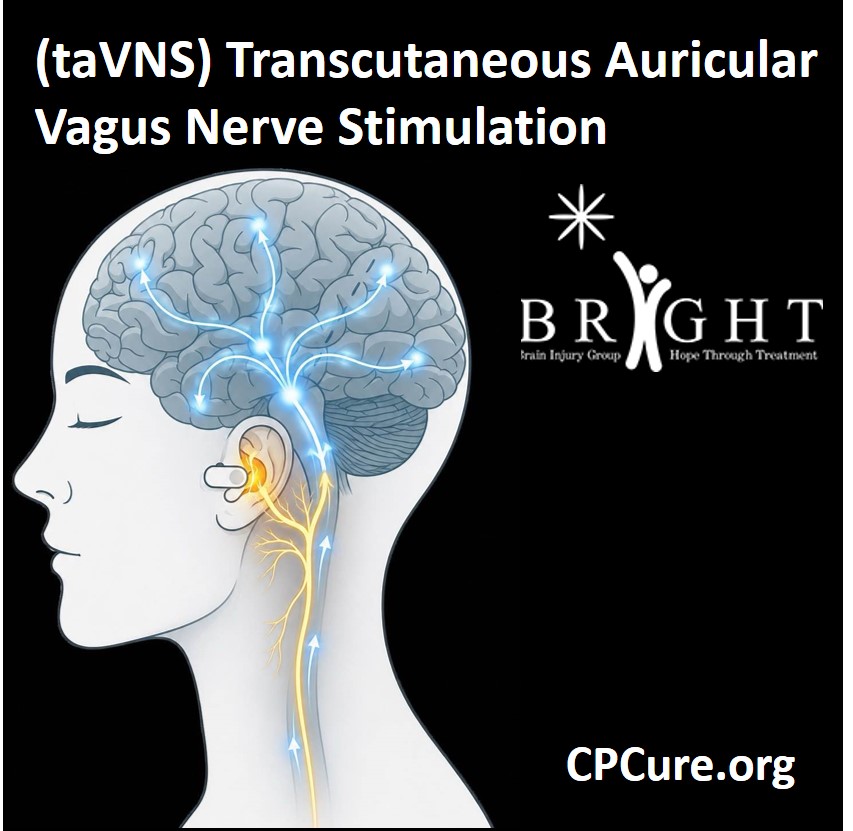
Why Peripheral Stimulation (Outside-In) Solves the Cortical (Inside-Out) Trap.
A review of all new global literature published in the week of July 20th, 2026 yields one (1) Additive finding. However, this week also introduces a definitive Null Result regarding direct cortical stimulation (tDCS) and an illustrative clinic-bound supportive study.
The academic community typically frames neuro-rehabilitation failures as direct motor output limitations—a structural assumption that muscles are too stiff or pathways too damaged. But academia is diagnosing the wrong bottleneck:
The failures of central cortical approaches (Inside-to-Out like tDCS) are not from a lack of patient effort, but a fundamental biological mismatch. BRIGHT will detail below how the structural shift from “inside-out” brain mechanisms to “outside-in” peripheral mechanisms bypasses the volatile parameters of direct brain stimulation entirely.
Executive Summary: Horizon Filter Evaluation – Week 31, July 27th, 2026
Analysis of 26 CP studies + 200 additional broader Brain Injury studies reveals a sharp divergence between durable peripheral stimulation and stagnant central stimulation techniques, as detailed in the full review data.
- Additive (Long-Term): Two-Year Retention of Benefits After Paired Vagus Nerve Stimulation in Stroke Paired Vagus Nerve Stimulation (taVNS) demonstrated durable, 24-month functional gains, confirming the effectiveness of home-based peripheral stimulation [PMID 42447422]. VNS is directly addressed by the PRIME domain of the BRIGHT NeuroLoop Protocol.
- Null Result (Cortical): The Effects of Visuomotor Training and tDCS Stimulation on Visuomotor Integration: An Electrophysiological Approach Combining direct transcranial cortical stimulation (tDCS) with training failed to produce meaningful electrophysiological or functional improvements [PMID 42501781].
- Supportive (Clinic-Bound):A robotic perturbation trainer for transverse-plane gait perturbations in pediatric cerebral palsy Robotic perturbation systems effectively corrected pediatric gait but remain tethered to clinical settings, limiting daily accessibility [PMID 42502775].
The Shift to Peripheral Neuroplasticity
Long-term data refutes the notion that peripheral nerve stimulation is merely temporary. By coupling stimulation with active movement, baseline corrections are maintained over time. The BRIGHT approach leverages this by using transcutaneous aurally-applied VNS (taVNS) to drive “outside-in” signal propagation, stabilizing subcortical loops.
These technologies are often bottlenecked by insurance models favoring in-clinic hardware, despite the capability for decentralized, high-frequency home deployment.
Historic Paradigm Shift: The EarnedGain Framework
This week, BRIGHT & cpcure.com introduce a foundational breakthrough that transforms how neuro-rehabilitation will be measured, tracked, and engineered: The EarnedGain Framework, powered by the VectorDial Smartphone Dashboard.
The “Tightrope Walk” Model of Brain Injury Recovery
Traditional clinical trials credit a piece of engineering hardware for 24-month patient outcomes. This is a fundamental misinterpretation of biological data. Long-term longitudinal gains are never driven by a persistent electrical echo from a device that was turned off months ago. Instead, they are driven by a behavioral tipping point governed by Hebbian plasticity and behavioral entrapment.
Recovery is a high-stakes tightrope walk with two distinct trajectories:
1. Tipping Left (Falling off the Cliff)
If an intervention—whether VNS, complex robotics, or intensive clinic-based physical therapy—only improves a patient’s motor control by 10%, they remain trapped on the left side of the tightrope. When they return home, using their impaired hand to open a door takes 30 seconds of frustrating effort, while using their healthy hand takes 1 second.
The brain operates as an efficient, energy-saving computer. It will always choose the path of least resistance, a phenomenon known as Learned Non-Use. Because the newly cleared motor pathway is neglected in the real world, the brain prunes those connections. The patient regresses completely to baseline, falling off the cliff.
2. Tipping Right (The Change Sticks)
If the intervention pushes the patient’s functional capacity past a critical Daily Utility Threshold (DUT), they tip safely to the right. Suddenly, using the weaker limb to pick up a fork or stabilize a cup requires an acceptable, realistic amount of metabolic and mental effort.
The patient begins choosing to use the limb natively during everyday, unstructured activities. At this exact cross-over point, normal life transforms into a continuous, self-sustaining therapy session. Every meal consumed, door opened, and object grabbed provides hundreds of random, high-yield functional repetitions. The change sticks because the real-world environment is actively reinforcing the neural pathway, making the device that initiated it completely irrelevant.
The Real Value of a Device: A Temporary Wedge
BRIGHT’s “tightrope walk” model clarifies the precise role of taVNS, tDCS, or TMS. A device is never a permanent cure or a long-term driver. It is simply a temporary neurochemical accelerator. [1]
By flooding the motor cortex with acetylcholine and norepinephrine during training, a device lowers the electrical resistance of the brain’s remaining networks. It makes it easier for the patient to achieve that critical extra 15% of movement control during the clinical training window so they can be pushed over to the right side of the tightrope. Once they cross that threshold and the daily habit forms, the hardware has done its job.
For the NeuroLoop Protocol, this means our engineering focus is completely decoupled from long-term device reliance. The sole objective of any stimulation step is to serve as a high-intensity, short-term wedge to forcefully push the patient past their specific DUT. If the protocol fails to achieve that tipping point, the patient will always fall off the cliff.
Replacing GMFM via the VectorDial Smartphone Dashboard
Traditional pediatric neurology measures like the Gross Motor Function Measure (GMFM) reward biological luck while invisible-izing parental grit. Mild injuries naturally coast to high-percentage recoveries on baseline momentum alone, while severe injuries require monumental effort just to secure a 5% milestone. Traditional clinical measures reward the coasting, leaving parents of severe children swimming in unwarranted medical guilt.
The EarnedGain Framework corrects this systemic flaw:
- Quantifying Grit: By pairing low-cost markerless computer vision with wearable sensors, this machine-learning framework builds a strict, real-time N-of-1 trajectory map unique to each child.
- Isolating True Progress: Natively accessible via the VectorDial Smartphone Dashboard, the system filters out natural biological coasting to isolate and quantify the exact progress manufactured by hard work—finally giving parents of severe children the mathematical and medical credit they deserve.
- Mathematical DUT Tracking: The Daily Utility Threshold (DUT) is the precise mathematical point where a child’s brain shifts from actively rejecting a weak limb to naturally adopting it for real-world tasks. By turning everyday movement into a vector calculation, we strip away subjective clinical guesswork and track whether a child is safely crossing the tightrope or about to fall off the cliff.
The BRIGHT Approach: Decentralized Rehabilitation
BRIGHT is reengineering rehabilitation by bypassing the traditional, clinic-centric model.
- Open-Source Data: Every week BRIGHT uses the Horizon Filter methodology to synthesize global biological, metabolic, and signal-processing techniques. Using proprietary AI models to ingest and analyzing vast amounts of global science and filter out only the true additive information.
- Hardware Decoupling: Focusing on software-driven, non-invasive neural routing to treat the brain rather than just the muscle, utilizing accessible commercial hardware.
- Consumer-Scale Access: We are in the process of deploying technology directly to the user to bypass clinical gatekeepers and reduce costs and most important, to increase treatment dosing to near 24×7 level.
BRIGHT Horizon Filter Week 31 |
||
| Status | Core Finding & Target Domain | Source / PMID |
| 🟢 Additive Breakthrough | Two-Year Retention of Benefits After Paired Vagus Nerve Stimulation in Stroke ➔ Validates Long-Term Home Neurostimulation: Post hoc analysis of VNS-REHAB trial shows sustained upper extremity functional gains over 24 months via self-activated peripheral nerve pathways. | 42318716 |
| 🔴 Clinic Bound | A Robotic Perturbation Trainer for Transverse-Plane Gait Perturbations in Pediatric Cerebral Palsy ➔ Gait Balance Correction: Cable-driven parallel robotic manipulator shows high kinematic precision in delivering treadmill perturbations but relies entirely on heavy lab setup. | 42502775 |
| 🔘 Null Result | The Effects of Visuomotor Training and tDCS Stimulation on Visuomotor Integration ➔ M1 Cortical Stimulation Inefficacy: 1 mA anodal cortical tDCS failed to augment training or alter sensorimotor (Mu) rhythms, proving limitations of inside-out tracking. | 42507995 |
| 🟡 Supportive | Home-based rehabilitation for children with spastic cerebral palsy ➔ Direct Home Efficacy: Quantifies significant motor improvements while explicitly demonstrating a marked drop in systemic caregiver and family burden. | 42497619 |
| 🟡 Supportive | Sleep disturbances in children with cerebral palsy, their siblings, and parents ➔ Home Ecosystem Strains: Qualitative analysis framing nocturnal disruptions as a holistic family unit pathology requiring remote stabilization. | 42499129 |
| 🟡 Supportive | Cultural Meanings and Lived Experiences of Grief Among Mothers of Children With Cerebral Palsy ➔ Caregiver Psychological Landscape: Unpacks the emotional and structural burdens of long-term home clinical care execution. | 42490760 |
| 🔴 Clinic Bound | Action observation therapy in pediatric cerebral palsy ➔ Lab-Bound Tracking: Proves balance adjustments and cortical changes but relies on heavy, fixed functional Near-Infrared Spectroscopy (fNIRS) caps. | 42477698 |
| 🔴 Clinic Bound | Eye-tracking working memory intervention in young people with severe dyskinetic cerebral palsy ➔ Fixed Hardware Gating: Demonstrates software-driven cognitive routing but utilizes static, high-end lab instrumentation. | 42480072 |
| 🔴 Clinic Bound | Small Brains, Big Data: The Current Landscape of Pediatric Brain-Computer Interface Clinical Trials ➔ Data-Complexity Barriers: Identifies institutional hurdles, high algorithmic latency, and physical hardware form-factor bottlenecks in early pediatric BCI. | 42496172 |
| 🔴 Clinic Bound | Lung function and ventilatory response during high-intensity treadmill walking ➔ Clinic Metabolic Benchmarking: Measures respiratory capacities in adults with CP using complex laboratory diagnostic cart infrastructure. | 42488970 |
| 🔴 Clinic Bound | Meta-Analysis of Executive Function in Children With Cerebral Palsy ➔ Metric Validity Flaws: Documents the systematic challenges of measuring structural neuro-cognitive shifts inside sterile clinic environments. | 42501197 |
| ⚪ Acute Phase | Percutaneous tendon lengthening and selective percutaneous myofascial lengthening ➔ Surgical Indications: Delphi consensus charting clinical parameters for invasive musculotendinous release frameworks. | 42495149 |
| ⚪ Acute Phase | Selective Talonavicular Arthrodesis With Talocalcaneal Stabilization ➔ Rigid Foot Deformity Correction: Orthopedic stabilization profiles for structural planovalgus foot pathology. | 42490132 |
| ⚪ Acute Phase | Calcaneal Lengthening Osteotomy in Cerebral Palsy ➔ Age and Skeletal Maturity: Longitudinal review of surgical outcome variances across pediatric age brackets. | 42482606 |
| ⚪ Acute Phase | Muscle morphology and intramuscular fat after treatment-as-usual ➔ Pharmacological Trophic Effects: Tracking changes in muscular volume and deep fatty infiltration following routine local BoNT-A injections. | 42501405 |
| ⚪ Acute Phase | Virtual reality paired with nitrous oxide for procedural pain ➔ Sedative Procedural Mitigation: Hospital clinical trial assessing synthetic analgesia combinations during one-off painful operations. | 42495014 |
| 🔵 Legacy | General Movement Assessment in infancy and later cognitive outcomes ➔ Early Life Biomarkers: Meta-analysis correlating spontaneous early infant movement patterns with later youth executive function baselines. | 42495886 |
| 🔵 Legacy | Study protocol for Full Speed Ahead ➔ Adaptive Sports Architecture: Clinical protocol evaluating Frame Running combined with structured, goal-directed physical training paradigms. | 42502158 |
| 🔵 Legacy | Neuropathic pain in cerebral palsy and related genetic conditions ➔ Pain Scoping Review: Maps prevalence data and characterizations of chronic neuropathic paths across specific genetic CP cohorts. | 42499151 |
| 🔵 Legacy | Transition to adulthood: Perspectives from young people with cerebral palsy ➔ Care System Discontinuity: Tracks the systemic organizational drop-off when transitioning out of pediatric healthcare infrastructures. | 42494240 |
| 🔵 Legacy | A Data-Driven Approach Towards Understanding the Volume and Complexity of Young Adults ➔ Cross-Sectional System Friction: Quantifies caseload volume and systemic gaps during adult healthcare onboarding. | 42482359 |
| 🔵 Legacy | Preterm birth and the association with neurodevelopmental disorders ➔ Regional Natural History: Cross-sectional epidemiological assessment linking early gestational timing to NDD prevalence in Pakistan. | 42476749 |
| 🔵 Legacy | Socioeconomic deprivation continues to be a significant determinant ➔ Social Epigenetics: Evaluates macro-environmental factors leading to preventable traumatic and postneonatal infectious CP lines. | 42498496 |
| 🔵 Legacy | Study protocol for the prospective, randomised… multicentre CIRCA DIEM trial ➔ NICU Circadian Environment: Protocol examining the effect of cycled hospital incubator light/noise on 2-year cognitive paths. | 42498463 |
| 🔵 Legacy | Emerging applications of artificial intelligence for early diagnosis ➔ Automated Diagnostics: Landscape tracking of computer-vision screening systems for early developmental risk markers. | 42487255 |
| 🔵 Legacy | Motor Difficulties at 12 Years of Age Were Common in Children Born Very Preterm ➔ Multi-Year Longitudinal Path: Links late-childhood balance and movement deficits back to early Retinopathy of Prematurity (ROP). | 42483802 |
| 🔵 Legacy | Biomechanical effects of powered knee orthoses and articulated ankle-foot orthoses ➔ Kinematic Orthotic Pilots: Explores steady-state joint angles during level walking using automated bracing elements. | 42482068 |
| 🔵 Legacy | Exploratory Assessment of Robotic Ankle Foot Orthosis Stiffness ➔ Mechanical Stair Ambulation: Evaluates how ankle joint neutral angles manipulate stance-phase work dynamics on stairs. | 42474601 |
Week 31 Technical Glossary: The EarnedGain Framework & Neural Engineering Terminology
This glossary serves as our internal architecture documentation for Week 31. It provides rigid engineering definitions for our newly introduced paradigm shift alongside the mechanics underlying this week’s additive, supportive, and null benchmark studies.
Part 1: The EarnedGain Framework & Core Architecture
1. The EarnedGain Framework
A machine-learning evaluation architecture designed to replace legacy, static clinical assessment scales. By pairing markerless computer vision with consumer-grade wearable sensors, the framework builds a real-time, longitudinal N-of-1 trajectory map of a patient’s movement. It mathematically filters out natural biological momentum (coasting) to isolate, measure, and credit the exact functional progress manufactured by deliberate training and parental intervention.
2. The Tightrope Walk Model
A neuro-rehabilitation model stating that central nervous system recovery is not a linear, hardware-dependent progression, but a binary behavioral tipping point. The model dictates that external neuromodulation or physical therapies only serve to move a patient across a razor-thin threshold. If the intervention fails to push the patient past this tipping point, the brain defaults to energy-saving pathways, causing immediate regression to baseline.
3. Daily Utility Threshold (DUT)
The precise mathematical coordinate where a damaged brain shifts from actively rejecting an impaired limb (learned non-use) to spontaneously adopting it for unstructured, real-world tasks. Crossing the DUT transforms the patient’s home environment into a self-sustaining therapy engine, where native daily activities generate hundreds of random, high-yield functional repetitions without relying on active device stimulation.
4. VectorDial Smartphone Dashboard
The consumer-facing software interface that hosts the EarnedGain Framework. It ingests decentralized video data and sensor telemetry to calculate real-world movement vectors, presenting parents and clinicians with transparent data reflecting true manufactured progress rather than subjective clinical scores.
5. Learned Non-Use
A behavioral and neurological phenomenon where a patient actively suppresses the use of an impaired limb because the metabolic and mental effort required to command it exceeds the effort of using an intact limb or compensatory mechanism. This lack of engagement causes the central nervous system to rapidly prune the corresponding cortical networks, locking the patient into a baseline regression cliff.
6. Temporary Neurochemical Accelerator (The Wedge Theory)
The core BRIGHT hypothesis regarding the utility of neuromodulation hardware (taVNS, tDCS, TMS). Instead of acting as a permanent cure, a device functions strictly as a short-term catalyst that floods the motor cortex with neuromodulators (acetylcholine and norepinephrine) to temporarily reduce network resistance. This opens a brief clinical window to forcefully push the patient’s functional control past the Daily Utility Threshold before the device is rendered irrelevant.
Part 2: Additive & Supportive Study Mechanics
7. Transcutaneous Auricular-Applied Vagus Nerve Stimulation (taVNS)
An “outside-in” peripheral neuromodulation method that delivers non-invasive electrical currents to the auricular branch of the vagus nerve via the external ear. This stimulation bypasses direct cortical targeting to trigger subcortical loops, signaling the nucleus tractus solitarius (NTS) to release localized bursts of acetylcholine and norepinephrine, driving targeted neuroplasticity when paired with active motor tasks.
8. Cortical Latency Trap
The structural failure point inherent to direct cortical stimulation models. Because “inside-out” methods target complex, highly volatile cortical networks directly, they are bottlenecked by rapid signal attenuation, high algorithmic latency, and intense patient-to-patient anatomical variance, rendering home deployment highly unstable.
9. Transcranial Direct Current Stimulation (tDCS)
An “inside-out” neuromodulation technique that applies low-amplitude (typically 1–2 mA) direct electrical currents to the scalp via electrodes to alter cortical excitability. This week’s null result confirms that tDCS fails to consistently augment visuomotor integration or alter sensorimotor (Mu) rhythms due to systemic targeting limitations.
10. Transverse-Plane Gait Perturbations
Automated, mechanical forces applied perpendicular to the direction of a patient’s walking path during treadmill training. While highly effective at forcing the central nervous system to correct walking asymmetries and dynamic balance deficits in cerebral palsy, the approach remains heavily bottlenecked by heavy, clinic-tethered robotic cable systems.
11. Functional Near-Infrared Spectroscopy (fNIRS)
A non-invasive, laboratory-bound optical imaging technique that measures changes in hemoglobin concentrations within the brain to track localized cortical activity. Used in clinic-bound studies to observe cortical responses during Action Observation Therapy (AOT), its requirement for delicate, high-end fixed headcaps restricts its utility to sterile research labs.
12. Gross Motor Function Measure (GMFM)
An institutional, observational clinical assessment tool designed to evaluate alterations in gross motor function in children with cerebral palsy. The scale is limited by its inability to separate natural biological coasting from hard-earned functional progress, highlighting the structural need for the EarnedGain Framework.
Creator Credentials
Author: Matt Palaszynski
- Founder, BRIGHT Foundation: Leading a global initiative to “close the loop” on Cerebral Palsy recovery through data-driven research.
- 25+ Years Lived Experience: Navigating life with a daughter with CP provides a primary, first-person understanding of the physiological and clinical gaps in current care models.
- GE Alumnus & Business Leader: Leveraging decades of experience in operational excellence, complex systems, and strategic leadership to apply rigorous meta-study frameworks to neurological research.
- Methodology: Combines personal advocacy with professional systems-thinking to synthesize NCBI PubMed data into the actionable NeuroLoop Protocol.
| Citation | PMID |
| 1.General Movement Assessment in infancy and later cognitive outcomes: A systematic review and meta-analysis Sarah E Hall, Caroline F Alexander, Kaitlyn Turbett, Natasha Amery, Emily R Young, Alison Salt, Sheau Huey Chen, Samudragupta Bora, Robert S Ware, Catherine Elliott, Ashleigh Thornton, Jane Valentine Dev Med Child Neurol. 2026 Jul 24. Online ahead of print. PMID: 42495886 | 42495886 |
| 2.Percutaneous tendon lengthening and selective percutaneous myofascial lengthening in children with cerebral palsy: Establishing surgical indications using the Delphi method Michael Wade Shrader, Benjamin J Shore, Henry G Chambers, Tim Theologis, Robert M Kay, Erich Rutz, James J McCarthy, Kristan A Pierz, Kerr Graham J Child Orthop. 2026 Jul 22:18632521261466699. Online ahead of print. PMID: 42495149 | 42495149 |
| 3.Selective Talonavicular Arthrodesis With Talocalcaneal Stabilization for Flexible Planovalgus in Cerebral Palsy: Outcomes Within a Pathophysiology-Based Treatment Strategy Alina Badina, Xavier du Cluzel de Remaurin, Eudes Goudjo, Samuel Georges, Anais Kerkouche, Philippe Wicart, Eric Desailly, Nejib Khouri J Pediatr Orthop. 2026 Jul 22. Online ahead of print. PMID: 42490132 | 42490132 |
| 4.Calcaneal Lengthening Osteotomy in Cerebral Palsy: Does Age at Intervention Influence Outcomes? David E Westberry, Jacob M Bailey, Emily R Shull, Branum Bo Layton, Lauren C Hyer J Pediatr Orthop. 2026 Jul 22. Online ahead of print. PMID: 42482606 | 42482606 |
| 5.Study protocol for Full Speed Ahead: an intervention for improved activities in daily life through Frame Running and Goal directed training Ann-Christin Eliasson, Kristina Löwing, Emma Hjalmarsson, Cecilia Lidbeck, Agnes Adestedt, Julia Starck, Magnus Aspdahl, Josefin Löwing, Emelie Frisk, Johanna Strand, Annika Ericson, Kristina Andersson, Eva Broström, Ola Kvist, Jessica Norrbom, Ferdinand von Walden BMC Pediatr. 2026 Jul 24;26(1):684. PMID: 42502158 | 42502158 |
| 6.Muscle morphology and intramuscular fat after treatment-as-usual including botulinum neurotoxin A injections in children with cerebral palsy No authors listed Dev Med Child Neurol. 2026 Jul 25. Online ahead of print. PMID: 42501405 | 42501405 |
| 7.Home-based rehabilitation for children with spastic cerebral palsy: Implications for motor function and family burden Kangxin Huo, Ting Xue, Jingyuan Jiang, Ziyan Ye, Yingqiu Qian, Jiaxin Wu, Tiancheng Yu, Qingchang Wu, Guoxiang Wang, Bocheng Chen Acta Psychol (Amst). 2026 Jul 24;269:107531. Online ahead of print. PMID: 42497619 | 42497619 |
| 8.The mirror neuron system in typically and atypically developing children: Evolution, dysfunction and rehabilitative purpose. A systematic review Scrocco Antea, Ferragina Francesca, Bianucci Carolina, Maria Chiara Di Lieto, Sgandurra Giuseppina Neurosci Biobehav Rev. 2026 Jul 22;189:106882. PMID: 42480680 | 42480680 |
| 9.Action observation therapy in pediatric cerebral palsy: an fNIRS-based investigation of cortical responses and balance-a randomized controlled trial Melike Özipek, Mevhibe Saricaoglu, Lütfü Hanoğlu, Fatma Mutluay J Neuroeng Rehabil. 2026 Jul 21. Online ahead of print. PMID: 42477698 | 42477698 |
| 10.Neuropathic pain in cerebral palsy and related genetic conditions: A scoping review of prevalence, characteristics, and management No authors listed Dev Med Child Neurol. 2026 Jul 24. Online ahead of print. PMID: 42499151 | 42499151 |
| 11.Sleep disturbances in children with cerebral palsy, their siblings, and parents: A qualitative descriptive study No authors listed Dev Med Child Neurol. 2026 Jul 24. Online ahead of print. PMID: 42499129 | 42499129 |
| 12.Lung function and ventilatory response during high-intensity treadmill walking in adults with cerebral palsy: a cross-sectional study Eivind Lundgaard, Hanna Kraggerud, Charlotta Hamre, Matthijs Wouda J Rehabil Med. 2026 Jul 23;58:jrm44817. PMID: 42488970 | 42488970 |
| 13.Small Brains, Big Data: The Current Landscape of Pediatric Brain-Computer Interface Clinical Trials Christopher A Bobier, Reza Peyravi, Daniel Hurst J Child Neurol. 2026 Jul 24:8830738261467621. Online ahead of print. PMID: 42496172 | 42496172 |
| 14.Virtual reality paired with nitrous oxide for procedural pain in children: a randomized controlled trial Maykala J Williams, Breanne J Byiers, Nanette Aldahondo, Todd Dalberg, Frank J Symons, Chantel C Burkitt Pain Rep. 2026 Jul 22;11(4):e1462. eCollection 2026 Aug. PMID: 42495014 | 42495014 |
| 15.Biomechanical effects of powered knee orthoses and articulated ankle-foot orthoses in people with diparetic cerebral palsy: a pilot study Samuel Finnegan, Mikaela Juco, Ranita H K Manocha, Emily Rogers-Bradley J Neuroeng Rehabil. 2026 Jul 21. PMID: 42482068 | 42482068 |
| 16.Eye-tracking working memory intervention in young people with severe dyskinetic cerebral palsy: a pilot study Saranda Bekteshi, Alexandra Kalkantzi, Evelien Martens, Bernard Dan, Roser Pueyo Disabil Rehabil Assist Technol. 2026 Jul 21:1-23. Online ahead of print. PMID: 42480072 | 42480072 |
| 17.Exploratory Assessment of Robotic Ankle Foot Orthosis Stiffness and Neutral Angle on Stair Ambulation in Individuals with Cerebral Palsy Samuel Hopkins, Connor Gaudette, Maria Jose Silvetti, Zachary F Lerner Ann Biomed Eng. 2026 Jul 20. Online ahead of print. PMID: 42474601 | 42474601 |
| 18.Cultural Meanings and Lived Experiences of Grief Among Mothers of Children With Cerebral Palsy in Northeast Thailand Nedruetai Punaglom, Rattiya Thong-On, Thongchai Armartpundit, Bih-Ching Shu J Transcult Nurs. 2026 Jul 23:10436596261465988. Online ahead of print. PMID: 42490760 | 42490760 |
| 19.Preterm birth and the association with neurodevelopmental disorders (NDDs) in children born in Pakistan: a retrospective cross-sectional study Arsalan Tariq, Abdul Saad BMJ Paediatr Open. 2026 Jul 20;10(1):e003883. PMID: 42476749 | 42476749 |
| 20.Meta-Analysis of Executive Function in Children With Cerebral Palsy: an Investigation of Challenges to Measurement Validity Yueting Zhan, Ingrid Honan, Petra Karlsson, Kit Double, Yunze Li, Remy Blatch-Williams, Hamna Khan, Damian Birney Neuropsychol Rev. 2026 Jul 25. Online ahead of print. PMID: 42501197 | 42501197 |
| 21.Transition to adulthood: Perspectives from young people with cerebral palsy, parents, and health professionals No authors listed Dev Med Child Neurol. 2026 Jul 24. Online ahead of print. PMID: 42494240 | 42494240 |
| 22.A Data-Driven Approach Towards Understanding the Volume and Complexity of Young Adults With Chronic Medical Conditions Transitioning to Adult Healthcare: A Cross-Sectional Study Mary White, Ameer Lambrias, Evelyn Culnane, Alice Voskoboynik J Paediatr Child Health. 2026 Jul 21. PMID: 42482359 | 42482359 |
| 23.Socioeconomic deprivation continues to be a significant determinant of preventable infectious and traumatic causes of postneonatal cerebral palsy Viraraghavan V Ramaswamy, Daniele Trevisanuto Evid Based Nurs. 2026 Jul 24:ebnurs-2026-104649. Online ahead of print. PMID: 42498496 | 42498496 |
| 24.Efficacy of cycled environmental light and noise during initial hospitalisation for improved cognitive outcomes at 2 years in infants born extremely or very preterm: study protocol for the prospective, randomised, open, blinded endpoint controlled multicentre CIRCA DIEM trial J Jane Pillow, Rod W Hunt, Julie A Marsh, Peter J Anderson, Peter J Mark, Alicia J Spittle, Andrew J O Whitehouse, Nadia Badawi, CIRCA DIEM Study BMJ Open. 2026 Jul 24;16(7):e112665. Trial registration number: ANZCTRN12618000371291. PMID: 42498463 | 42498463 |
| 25.Emerging applications of artificial intelligence for early diagnosis and assessments for people with cerebral palsy Shannon M Blee, Julia Santarosa, Mary Elaine Graham, Kevin Xin, Anna Maria Wilms Floet, Alexander Hoon, Eric M Chin Dev Med Child Neurol. 2026 Jul 22. Online ahead of print. PMID: 42487255 | 42487255 |
| 26.Motor Difficulties at 12 Years of Age Were Common in Children Born Very Preterm and Were Associated With ROP and Motor Performance in Infancy Cecilia Montgomery, Ylva Fredriksson Kaul, Martin Johansson, Sirkku Setänen, Kine Johansen, Katarina Strand Brodd, Lena Hellström-Westas Acta Paediatr. 2026 Jul 22. Online ahead of print. PMID: 42483802 | 42483802 |
Conflict of Interest Statement
The BRIGHT Foundation and its founder, Matt Palaszynski, maintain no commercial or business interests in the medical technologies, pharmaceutical products, or clinical services discussed on this page.
- Non-Profit Mission: Our objective is purely research-driven, aimed at identifying the most effective paths to a functional cure.
- Independence: No funding is received from manufacturers of the devices or therapies reviewed in our weekly meta-studies.
- Transparency: All citations are linked directly to PubMed (PMIDs) to ensure users can verify the raw data independently.