Executive Summary: Week 20, 2026
This week’s meta-study highlights a leap in Objective Quantification. The transition from subjective clinical observation to objective data streams is solidified by Study #26 (Multimodal Spasticity Index) and Study #27 (Wearable Sensors in Infancy). These are Additive because they provide the high-resolution “biometric breadcrumbs” necessary to feed the CORE Digital Twin.
Additionally, the stratification of genetic phenotypes (Study #21) and the viability of non-sedate MRI (Study #17) suggest a future where the DECODE phase is both faster and less invasive.
For Study #27 (Wearable Sensors in Infancy)
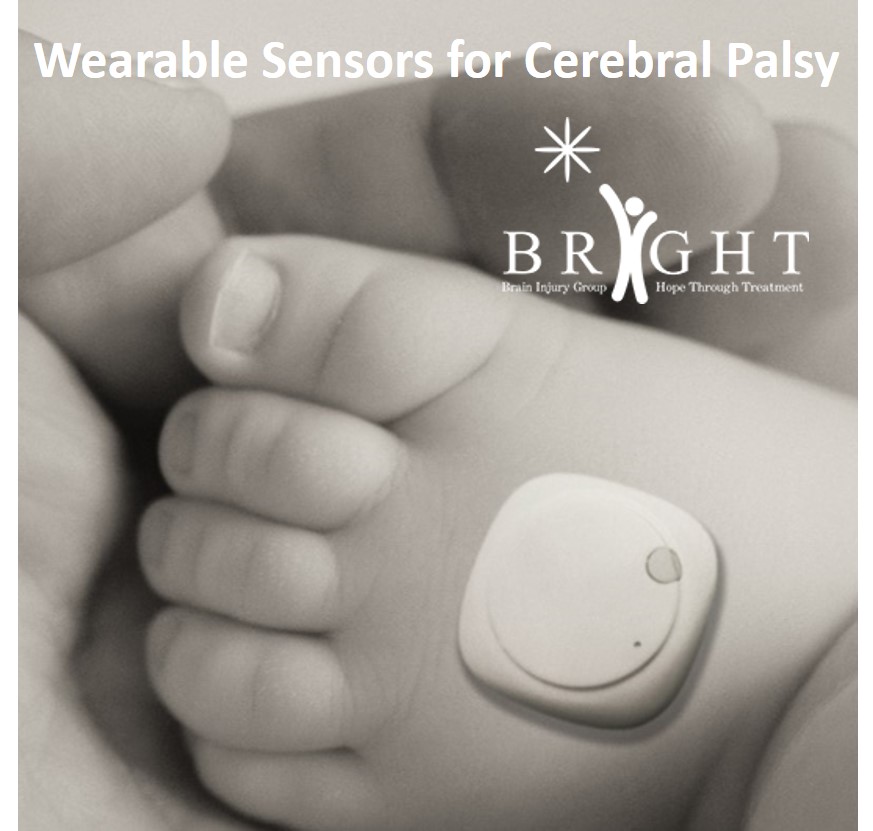
- Sensor Placement: Infants wore two APDM Opal sensors, one secured to each ankle using custom legwarmers with pockets.
- The Hardware: The sensors are small, wireless inertial measurement units (IMUs) roughly the size of a large coin or a standard U.S. quarter.
- Movement Tracking: Data collected (acceleration and angular velocity) is used to differentiate movement patterns, such as frequency and duration, which were found to be lower in infants at high risk for CP.
CLEAR, UNLOCK, TUNE, PRIME, and CEMENT are entirely missing from this week’s literature. This “gaping hole” indicates that while the field is mastering the ability to map and measure the CP connectome, it is not yet publishing corresponding advancements in non-invasive circuit tuning, BBB opening, or neurotrophic saturation. We are seeing a “Mapping without Modulating” trend that leaves the most potent tools for neural restoration on the sidelines this week.

Every week, BRIGHT reviews the latest cerebral palsy and brain injury research from NCBI PubMed and Entrez databases. We categorize each study into the ten NeuroLoop Protocol Domains and evaluate its impact: Additive, Supportive, or Legacy. New “Additive” research is instantly integrated, ensuring the NeuroLoop Protocol remains the global gold standard for neuro-rehabilitation. Supportive studies validate existing methods, and Legacy studies evaluate the current standard care with little to no impact on neuro-repair.
BRIGHT NeuroLoop Protocol Analysis: Week 19, 2026
Keywords: Wearable sensors for CP, Spasticity Quantification Index, Non-sedate MRI for children, Neonatal cell therapy, COL4A1 genetic CP, Early CP prediction.
Focus: Highlight the shift from clinical observation to objective digital biometrics (Wearables/AI-Index) as the future of Cerebral Palsy diagnosis and management.
| INDEX | DOMAIN | SHORT TITLE / FOCUS | STATUS | BRIGHT CONTEXT | PMID |
| 20-26:26 | 1. DECODE | Multimodal Spasticity Index | Additive | Digital Twin: Objective composite data to replace subjective clinical scales. | 42081544 |
| 20-26:27 | 1. DECODE | Infant Wearable Sensors | Additive | Connectome Mapping: Uses leg kinetics to predict risk before clinical onset. | 42090915 |
| 20-26:17 | 1. DECODE | Non-Sedate MRI Feasibility | Additive | Connectome Mapping: High-res structural data without anesthesia risks. | 42073137 |
| 20-26:21 | 1. DECODE | COL4A1/A2 Stratification | Additive | Connectome Mapping: Genomic precision to guide domain-specific interventions. | 42099677 |
| 20-26:28 | 1. DECODE | Perinatal Stroke Outcomes | Supportive | Identifies early triggers for targeted Connectome analysis. | 42082161 |
| 20-26:29 | 1. DECODE | Chorioamnionitis Impact | Supportive | Refines the predictive window for high-risk preterm infants. | 42069082 |
| 20-26:1 | 1. DECODE | Upper-Limb Infant Movement | Supportive | Refines early detection markers for unilateral spastic CP. | 42102225 |
| 20-26:2 | 1. DECODE | Fidgety Age Finger Postures | Supportive | Identifies specific manual markers for early CP prediction. | 42097081 |
| 20-26:18 | 1. DECODE | 12-Year Preterm Motor Risk | Supportive | Long-term tracking of motor deficits in extremely preterm cohorts. | 42103362 |
| 20-26:13 | 1. DECODE | Pediatric Urodynamic Patterns | Supportive | Mapping autonomic dysfunction within the broader connectome. | 42097120 |
| 20-26:15 | 1. DECODE | Adult CP Pain Classification | Supportive | Standardizing pain data for better longitudinal tracking. | 42086434 |
| 20-26:14 | 1. DECODE | FunVis Vision Assessment | Legacy | Standard functional tool; lacks predictive/digital mapping depth. | 42095414 |
| missing | 2. CLEAR | ||||
| missing | 3. UNLOCK | ||||
| 20-26:25 | 4. UPDATE | Neonatal Cell Therapy | Additive | Paracrine Signaling: Biological repair targeting neonatal neuro-inflammation. | 42082735 |
| 20-26:16 | 5. FUEL | CP Undernutrition Analysis | Supportive | Linking GMFCS to mitochondrial/nutritional requirements. | 42083482 |
| 20-26:8 | 6. SYNC | Music Therapy & Rehab | Additive | Modulation: Leveraging rhythmic-motor pathways to drive neural synchrony. | 42099975 |
| 20-26:3 | 6. SYNC | Early Hand Therapy | Supportive | Bridging clinical research to real-world modulation strategies. | 42083152 |
| 20-26:7 | 6. SYNC | Home-Based Upper Limb Activity | Supportive | Meta-analysis of decentralized motor modulation. | 42104635 |
| 20-26:12 | 6. SYNC | Surgery & Muscle Synergies | Supportive | Quantifying how mechanical changes impact neural firing patterns. | 42081106 |
| 20-26:4 | 6. SYNC | Reconstructive Hip Surgery | Legacy | Structural correction without addressing neuro-restoration. | 42098684 |
| 20-26:5 | 6. SYNC | Osteotomy for Gait | Legacy | Standard orthopedic correction with minimal neural focus. | 42087093 |
| 20-26:10 | 6. SYNC | Manual Massage | Legacy | Temporary relief; fails to address the root neural circuit. | 42089766 |
| 20-26:11 | 6. SYNC | Strabismus Surgery | Legacy | Standard corrective surgery for visual alignment. | 42084161 |
| missing | 7. TUNE | ||||
| missing | 8. PRIME | ||||
| 20-26:6 | 9. GUIDE | AFO Impact on Gait | Supportive | Exoskeletal: External mechanical support for motor plasticity. | 42085936 |
| 20-26:22 | 9. GUIDE | REASON CP Framework | Supportive | Environmental: Systems-based approach to lifespan participation. | 42094902 |
| 20-26:23 | 9. GUIDE | Caregiver Impact on Pain | Supportive | Social Bio-Hacking: Modulating the environment to lower inflammation. | 42087068 |
| 20-26:19 | 9. GUIDE | Dystonia Caregiver Priorities | Supportive | Aligning therapy goals with environmental/social realities. | 42089772 |
| 20-26:20 | 9. GUIDE | Persian PEM-CY Validation | Legacy | Cultural adaptation of existing participation measures. | 42083425 |
| 20-26:9 | 9. GUIDE | Adapted Folk Games | Supportive | Social Bio-Hacking: Using participation to drive neuro-engagement. | 42090600 |
| 20-26:24 | 9. GUIDE | Transitioning to Adulthood | Legacy | Qualitative insights into social challenges of aging with CP. | 42084417 |
| missing | 10. CEMENT |
Week 20 2026 Cerebral Palsy Research Citations
| Index | Citation | PMID |
| 20-26:1 | 1.Upper-limb movement in infants at risk for unilateral spastic cerebral palsy: A scoping review Cornelia H Verhage, Martijn Kooij, Linda S De Vries, Jan Willem Gorter, Niek E Van Der Aa, Marco Van Brussel Developmental Medicine & Child Neurology · Online ahead of print (May 8, 2026) PMID: 42102225 | 42102225 |
| 20-26:2 | 2.The role of asymmetrical finger postures during fidgety age in the prediction of unilateral cerebral palsy Karianne E Kraft, Annemiek M Roescher, Dyvonne H Baptist, Arend F Bos Early Human Development · Online ahead of print (May 4, 2026) PMID: 42097081 | 42097081 |
| 20-26:3 | 3.Implementation strategies for early hand therapy for young children with cerebral palsy Alicia J Hilderley, Dejana Nikitovic, Darcy Fehlings, John Andersen, Eleanor Heptonstall, Christine Cassidy, Adam Kirton Developmental Medicine & Child Neurology · Online ahead of print (May 4, 2026) PMID: 42083152 | 42083152 |
| 20-26:4 | 4.Reconstructive hip surgery short-term outcomes and redislocation rate in non-ambulatory children with spastic cerebral palsy: a prospective cohort study Ahmed S Nagy, Mazen S Aboulesaad, Ahmed M Saied, Khaled Zaghloul BMC Musculoskeletal Disorders · May 7, 2026 PMID: 42098684 | 42098684 |
| 20-26:5 | 5.Functional gait outcomes following derotation osteotomy for transverse plane malalignment in unilateral cerebral palsy Stefanos Tsitlakidis, Nicholas A Beckmann, Sebastian I Wolf, Paul Mick BMC Pediatrics · May 5, 2026 PMID: 42087093 | 42087093 |
| 20-26:6 | 6.Comparative effects of bilateral and unilateral ankle-foot orthoses on balance and gait in children with spastic unilateral cerebral palsy Hasan Hüseyin Babayi?it, Merve Y?lmaz, Ali ?mran Yalç?n, Esra At?lgan, Semra Topuz Gait & Posture · Online ahead of print (May 2, 2026) PMID: 42085936 | 42085936 |
| 20-26:7 | 7.Home-based therapy for upper limb activity in children and adolescents with unilateral cerebral palsy: systematic review and meta-analysis Cristina Lirio-Romero, Hilde Feys, Purificación López-Muñoz, Roslyn N Boyd, María Coello-Villalón, Helena Romay-Barrero, Julián Ángel Basco-López, Giuseppina Sgandurra, Elena Beani, Rocío Palomo-Carrión Review Disability and Rehabilitation · Online ahead of print (May 8, 2026) PMID: 42104635 | 42104635 |
| 20-26:8 | 8.Advances in music therapy for neurological rehabilitation Miao Yu, Yuxuan Song, Haochong Song, Haoyang Duan, Guodong Zhang Frontiers in Neurology · April 22, 2026 PMID: 42099975 | 42099975 |
| 20-26:9 | 9.Impact of adapted folk games on activity and participation in individuals with cerebral palsy – an exploratory proof of concept study Mansoor Rahman A, Jagadish Kumar, Kavitha Raja Disability and Rehabilitation: Assistive Technology · Online ahead of print (May 6, 2026) PMID: 42090600 | 42090600 |
| 20-26:10 | 10.Efficacy of Manual Massage Therapy on Spasticity in Patients with Stroke and Cerebral Palsy: A Systematic Review and Meta Analysis Hankyu Park, Byoungha Hwang, Minbong Kang NeuroRehabilitation · Online ahead of print (May 6, 2026) PMID: 42089766 | 42089766 |
| 20-26:11 | 11.Outcomes of strabismus surgery in patients with cerebral palsy André Leite, Juliana Friedenberg, Nilce Tiemi Shiwaku Kamida, Monica Fialho Cronemberger Strabismus · Online ahead of print (May 5, 2026) PMID: 42084161 | 42084161 |
| 20-26:12 | 12.Influence of surgical intervention on pre- and post-surgery patient specific muscle synergies in children with cerebral palsy Tiana Breust, Jiayin Lin, Vincent C K Cheung, Firooz Salami, Sebastian I Wolf, Gursel Alici, Manish Sreenivasa Experimental Brain Research · May 4, 2026 PMID: 42081106 | 42081106 |
| 20-26:13 | 13.Urodynamic patterns in pediatric patients with cognitive developmental disorders: A retrospective descriptive study Sebastian Tobia-Gonzalez, Natalie Barganski, Melissa Miller, Amarachi Ezekwere, Muhammad Owais, Salaar Khan, McKynna Beck, Oluwafemi Ojo, Leon Smith-Harrison, Juan Carlos Prieto Journal of Pediatric Urology · Online ahead of print (April 17, 2026) PMID: 42097120 | 42097120 |
| 20-26:14 | 14.FunVis: evaluating a brief functional vision assessment for non-vision specialists working with non-speaking children with bilateral cerebral palsy M T Clarke, T Griffiths, J Sargent, G Panesar, L McLaughlin, R Cooper, G Aberbach, J Swettenham Disability and Rehabilitation · Online ahead of print (May 7, 2026) PMID: 42095414 | 42095414 |
| 20-26:15 | 15.First steps toward pain classification among adults with cerebral palsy: A modified Delphi study Mary E Gannotti, David J Kohns, Garey H Noritz, Duncan O Wyeth, Elizabeth J Lucas, Elisabeth B Bates, Hana Azizi, Cristina A Sarmiento, Deborah E Thorpe, Stephen A Nichols, Jodi M Kreschmer, Susan L Koller, Lee Y Schuh, Elizabeth R Boyer, Mary M Schmidt, Linda E Krach, Karen Pleasant, Eric M Chin, Edward A Hurvitz, Amy F Bailes Disability and Health Journal · Online ahead of print (April 28, 2026) PMID: 42086434 | 42086434 |
| 20-26:16 | 16.Undernutrition in children with cerebral palsy: comparison of anthropometric measures across gross motor function levels Günce Ba?ar?r, Sema Bozkaya Yilmaz, P?nar Gençp?nar, Nihal Olgaç Dündar Nutritional Neuroscience · Online ahead of print (May 5, 2026) PMID: 42083482 | 42083482 |
| 20-26:17 | 17.Feasibility of Non Sedate Magnetic Resonance Imaging for Children with Cerebral Palsy: Tolerance and Structural Analysis Considerations Stefanie S Bradley, Elizabeth Pulcine, F Virginia Wright, Manohar Shroff, Kevin Chung, Tom Chau Children (Basel) · April 17, 2026 PMID: 42073137 | 42073137 |
| 20-26:18 | 18.Motor difficulties and associated risk factors at 12 years in children born extremely preterm: a population-based cohort study Maria Örtqvist, Nelly Padilla, Cecilia Montgomery, Karin Sävman, Thomas Abrahamsson, Aijaz Farooqi, Fredrik Serenius, Lisa B Thorell, Ulrika Ådén Archives of Disease in Childhood · Online ahead of print (May 8, 2026) PMID: 42103362 | 42103362 |
| 20-26:19 | 19.Clinical characteristics, functional impact and caregivers’ priorities in Malaysian children with dystonic cerebral palsy Husna Musa, Nor Hanim Mohamad Hanapi, Poorani Anandakrishnan, Suhaila Omar, Teik Beng Khoo Journal of Pediatric Rehabilitation Medicine · Online ahead of print (May 6, 2026) PMID: 42089772 | 42089772 |
| 20-26:20 | 20.The Participation and Environment Measure Children and Youth (PEM CY): Cultural Adaptation, Validity, and Reliability of the Persian Version for 5 to 17 Year Old Children With Cerebral Palsy Marzieh Pashmdarfard, Sara Zamiran, Navid Mirzakhani, Ebrahim Mahmoudi Occupational Therapy International · 2026 PMID: 42083425 | 42083425 |
| 20-26:21 | 21.Stratification of Phenotypes in Childhood-Onset COL4A1/COL4A2-Related Disorders Based on Age of Presentation Giulia S Porcari, Rudmila N Rashid, Caitlyn A Mulvihill, Lauren A Beslow, Holly A Dubbs, Erica M Schindewolf, Michael C Kaufman, Alexander K Gonzalez, Juliana S Gebb, Sonika Agarwal, Matthew T Whitehead, Ana G Cristancho Neurology Genetics · May 4, 2026 PMID: 42099677 | 42099677 |
| 20-26:22 | 22.REASON CP: a systems-based framework for clinical reasoning to support participation across the lifespan in childhood-onset neurodisability Margaret Mayston, Sarah Foley, Kelly Reynolds, Willeke Walsh, Gillian Saloojee Frontiers in Public Health · April 21, 2026 PMID: 42094902 | 42094902 |
| 20-26:23 | 23.The Social Context of Pain in Youth With Cerebral Palsy: The Role of Caregiver Mental Health, Parenting Style and Protective Responses to Pain Kendra A Mueri, Cara G Nania, Melanie Noel, Christopher Clark, Daniel Kopala Sibley, Elizabeth G Condliffe, Sandra J Mish, Laura Brunton, Carly A McMorris Child: Care, Health and Development · May 2026 PMID: 42087068 | 42087068 |
| 20-26:24 | 24.The concerns of mothers of female youth with physical disabilities in transitioning to adulthood: A qualitative study Courtney S Streur, Jodi M Kreschmer, Peace Asumadu, Daniela A Wittmann, Claire Z Kalpakjian, John F P Bridges Journal of Pediatric Rehabilitation Medicine · Online ahead of print (May 5, 2026) PMID: 42084417 | 42084417 |
| 20-26:25 | 25.Progress in cell therapies for neonatal conditions: Proceedings of the Third Neonatal Cell Therapies Symposium (2025) Abdul Razak, Suzanne L Miller, Courtney A McDonald, Madison C B Paton, Sophie Sinistaj, Won Soon Park, Augusto Zani, Ishmael M Inocencio, Salvatore Pepe, Bobbi Fleiss, Pierre Gressens, Tim Wolfs, Nancy Messino, Hannah Tribe, Atul Malhotra Pediatric Research · Online ahead of print (May 5, 2026) PMID: 42082735 | 42082735 |
| 20-26:26 | 26.Development and preliminary validation of a multimodal instrument for spasticity quantification using a composite index: A pilot study Juan Manuel Rosero Ñañez, Sabrina Schaly, Elizabeth Roldán Gonzalez, María de Los Ángeles Urbano Díaz, Julián Antonio Villamarín Muñoz PLOS ONE · May 4, 2026 PMID: 42081544 | 42081544 |
| 20-26:27 | 27.Spontaneous Leg Movements Measured by Wearable Sensors in Infancy Differentiate Later Risk for Cerebral Palsy Samuel R Pierce, Mustafa A Ghazi, Thubi H A Kolobe, Andrew H Fagg, Julie C Skorup, Noor I Ruwaih, Abbas F Jawad, Laura A Prosser, Beth A Smith Pediatric Neurology · Online ahead of print (April 16, 2026) PMID: 42090915 | 42090915 |
| 20-26:28 | 28.A retrospective analysis of perinatal stroke: hemostasis abnormalities, neonatal seizures, epilepsy recurrence, and two-year neurological outcome Aude Van Daele, Veerle Labarque, Anneleen Dereymaeker, Katrien Lemmens, Katrien Jansen Neuropediatrics · Online ahead of print (May 4, 2026) PMID: 42082161 | 42082161 |
| 20-26:29 | 29.Chorioamnionitis and long term neurodevelopment in preterm infants: What can we learn from the EPIPAGE 2 cohort study? Fanny Salmon, Mathilde Letouzey, Emeline Maisonneuve, Gilles Kayem Gynécologie Obstétrique Fertilité & Sénologie · Online ahead of print (April 30, 2026) PMID: 42069082 | 42069082 |
Creator Credentials
Author: Matt Palaszynski
- Founder, BRIGHT Foundation: Leading a global initiative to “close the loop” on Cerebral Palsy recovery through data-driven research.
- 25+ Years Lived Experience: Navigating life with a daughter with CP provides a primary, first-person understanding of the physiological and clinical gaps in current care models.
- GE Alumnus & Business Leader: Leveraging decades of experience in operational excellence, complex systems, and strategic leadership to apply rigorous meta-study frameworks to neurological research.
- Methodology: Combines personal advocacy with professional systems-thinking to synthesize NCBI PubMed data into the actionable NeuroLoop Protocol.
Conflict of Interest Statement
The BRIGHT Foundation and its founder, Matt Palaszynski, maintain no commercial or business interests in the medical technologies, pharmaceutical products, or clinical services discussed on this page.
- Non-Profit Mission: Our objective is purely research-driven, aimed at identifying the most effective paths to a functional cure.
- Independence: No funding is received from manufacturers of the devices or therapies reviewed in our weekly meta-studies.
- Transparency: All citations are linked directly to PubMed (PMIDs) to ensure users can verify the raw data independently.