Why Medical “Venture Capital” Models Fail Rehabilitation Robotics
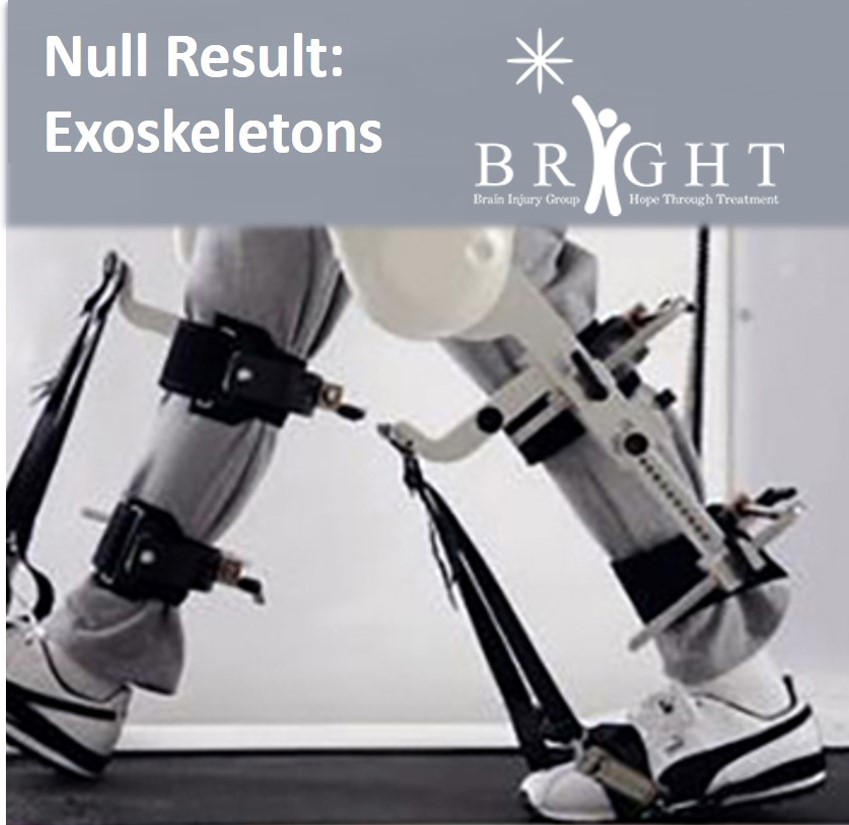
A review of all new global literature published in the week of July 13th, 2026 yields zero (0) Additive findings to the NeuroLoop Protocal. However this week does introduce two important Null Results regarding Exoskeletons.
The academic community frames these findings as a rigid engineering bottleneck—a mismatch where physical materials cannot keep pace with software intent. But academia is diagnosing the wrong failure point:
The two null results are not from failure of engineering, but rather is a result of the broken, corporate-driven medical model. BRIGHT will detail a very recent real world example of how the Medical “Venture Capital” Model has resulted in the near the total destruction of 20+ years of technological rehab Exoskeleton progress.
Executive Summary: Horizon Filter Evaluation of 29 Studies – Week 30, July 13th, 2026
The Week 30 2026 Horizon Filter tracking has analyzed two studies that contradict the narrative of the legacy neuro-rehabilitation hardware market. The published data presents a definitive double-null result:
1.) Study 16 (Li et al., 2026): Confirms that advanced AI-powered assistive software yields little utility because the mainstream physical robotic actuators fail to keep up with the complex real-time intent in unstructured, daily human environments. BRIGHT’s thesis is that the issue is not actuator engineering, as advanced actuators are available, the issue is the prevailing Medical “Venture Capital” Model keeps the latest tech from being implemented.
2.) Study 9 (Park et al.): Proves that lower-limb clinical exoskeletons largely fail to unlock independent motor pathways in the more severe GMFCS IV–V cohorts, demonstrating that current best in class robotic guidance can’t make a “functional change” for the most affected victims.
The Myth of Stagnant Hardware
The claim that physical hardware cannot keep pace with software intent is disproven when looking outside the restricted medical device eco-system. The broader commercial robotics landscape is currently experiencing a massive manufacturing explosion. High-torque, lightweight joint systems, and fast-reacting modular actuators are being mass-produced at an unprecedented consumer scale.
The physical technology required to interact with complex neurological loops is already built, tested, and commercially viable. The hardware is ready to integrate with advanced neural frameworks like the NeuroLoop Protocol.
Why isn’t it on the bodies of children who need it? Because the legacy medical device business model relies on margin extraction and regulatory moats, rather than manufacturing excellence and global adoption.
A Real Wold 2026 Case Study in Capital Extraction
When a technology market prioritizes corporate consolidation over functional utility, innovation is actively penalized. The modern neuro-rehabilitation landscape is littered with the wreckage of this exact playbook.
We can see one such example of this by looking closely at the public tracking of corporate reports within the sector. By executing aggressive private-equity strategies to consolidate pioneer European engineering brands, the framework shifted from clinical innovation to IPO equity capital extraction.
When a technology market prioritizes corporate consolidation over functional utility, innovation is actively penalized. The modern neuro-rehabilitation landscape is littered with the wreckage of this exact playbook.
These VC backed IPOs effectively starved the underlying engineering teams of R&D agility, freezing the hardware in time while layering superficial software updates on top of decades-old structural designs.
The financial strategy was clear: buy out the undisputed global brand leaders, eliminate direct-to-consumer or home-use pathways, and channel the technology exclusively into hospital procurement loops where prices could be artificially inflated.
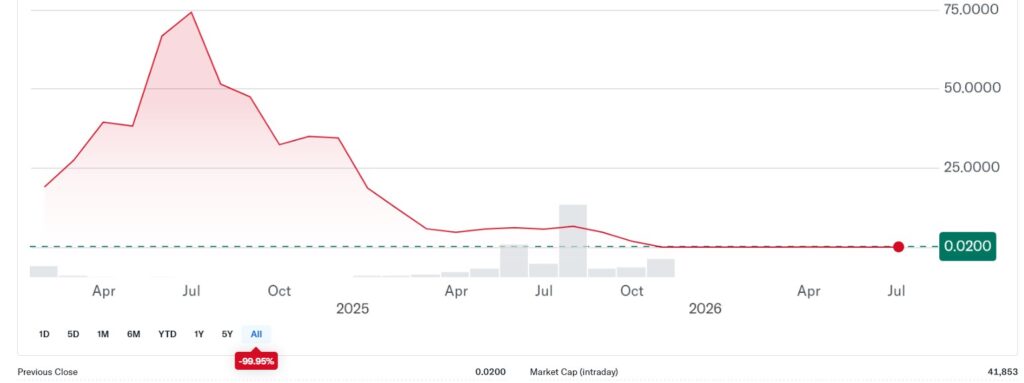
The strategy did not fail because of engineering; it failed because of corporate design. According to public financial filings, the shell companies used to execute these private-equity rollup strategies accumulated massive institutional debt obligations while operating at persistent net losses. The ultimate unravelling of these public vehicles in early 2026—resulting in exchange delistings, penny-stock liquidations, and abandoned vendor payments—proves that the legacy model cannot sustain itself. The entities used the technology to acquire massive debt and then skipped out on the payments. Investors and vendors are left holding empty corporate shells, while the foundational technology sits locked away behind legal barriers, insulated from the families who need it. [1]
Falling from a high of $75 per share on IPO hype in July 2025 to a current low of just $0.02 per share (a 99.95% lose) and debts in the millions.
The BRIGHT Approach: Routing Around the Gatekeepers
The total destruction of 20+ years of rehabilitation engineering in the actual example above was not a failure of physics; it was a failure of a broken economic distribution model. The legacy approach treats human rehabilitation as an asset to be monetized through insurance-subsidized scarcity.
The BRIGHT Foundation operates on an entirely opposite paradigm. Founded by a systems-engineering GE alumnus who understands the corporate playbook from the inside, BRIGHT rejects the business of managing disability.
Our approach routes completely around the legacy system:
- Open-Source Innovation: Utilizing the live tracking of the BRIGHT Horizon Filter to precision-synthesize global biological, metabolic, and signal-processing techniques into actionable recovery protocols, bypassing proprietary walls.
- Decoupling from Heavy Hardware: Focusing heavily on non-invasive neural-routing software and commercially available hardware to stabilize the body’s internal circuitry first, treating the brain rather than fighting the muscle with bulky clinic only exoskeltons.
- Consumer-Scale Democratization: Aligning directly with high-volume, decentralized consumer hardware supply chains. The moment advanced actuator tech is decoupled from the hospital procurement trap, it can be open-sourced and deployed directly to a parent for home use at a fraction of the cost.
BRIGHT not here to build a more expensive brace or a more exclusive corporate moat. The objective is the total obsolescence of the limitation itself, delivered directly to the families who need it, at a global scale.
[1] https://www.searchenginejournal.com
BRIGHT Horizon Filter Week 30
| Status | Core Finding & Target Domain | Source / PMID |
|---|---|---|
| ⚪ Structural Null Result | Study 16 (Li et al.) ➔ Outpaces Capital Infrastructure: Confirms advanced AI-powered assistive software yields low real-world utility because closed commercial development isolates adaptive algorithms from open, high-performance component hardware. | 42458819 |
| ⚪ Clinical Null Result | Study 9 (Park et al.) ➔ Reconfirms Access Barriers: Proves high-cost, clinic-bound lower-limb exoskeletons fail to unlock long-term independent motor pathways in severe GMFCS IV–V cohorts; institutional deployment models choke off the daily usage required to drive neuroplasticity. | 42459000 |
| 🟡 Supportive (Decentralized/Home-Bound) | Study 17 (Moodley et al.) ➔ Supports BRIGHT GUIDE Domain: Validates that low-cost, decentralized structural seating provides immediate, stable trunk support; open mechanical alignment completely bypasses cost-prohibitive institutional medical equipment gates. | 42458310 |
| 🔴 Strongly Supportive (Clinic-Bound Only) | Study 1 (Fräulin et al.) ➔ Supports BRIGHT GUIDE Domain: Validates automated CT synthetic modeling to estimate Cobb angles without radiation; clinical execution is structurally throttled by institutional, closed-source imaging software pipelines. | 42467608 |
| 🔴 Strongly Supportive (Clinic-Bound Only) | Study 2 (Yeniyurt & Günel) ➔ Supports BRIGHT DECODE Domain: Demonstrates that somatosensory tracking directly limits chronic participation metrics; assessment protocols remain locked behind proprietary, expensive testing batteries. | 42469308 |
| 🔴 Strongly Supportive (Clinic-Bound Only) | Study 3 (Kalkantzi et al.) ➔ Supports BRIGHT DECODE Domain: Connects executive deficits to bimanual robotic coordination impairments; data gathering is constrained within high-end, non-portable institutional laboratory hardware. | 42464203 |
| 🔴 Strongly Supportive (Clinic-Bound Only) | Study 5 (Metelski et al.) ➔ Supports BRIGHT TUNE Domain: Tracks highly variable responses to anodal brain stimulation; highlights the failure of standardized commercial stimulation profiles to account for individual phenotypic baseline shifts. | 42464518 |
| 🔴 Strongly Supportive (Clinic-Bound Only) | Study 6 (Wang et al.) ➔ Supports BRIGHT GUIDE Domain: Protocols whole-body vibration therapy for chronic gait; clinical utility is artificially restricted by reliance on static, capital-intensive institutional vibration platforms. | 42463209 |
| 🟡 Supportive (Decentralized/Home-Bound) | Study 7 (Coello-Villalón et al.) ➔ Supports BRIGHT GUIDE Domain: Measures community participation boundaries between chronic CP and typical peers using decentralized home-logging tools to bypass clinical observation biases. | 42439478 |
| 🔴 Strongly Supportive (Clinic-Bound Only) | Study 8 (Tajitsu et al.) ➔ Supports BRIGHT GUIDE Domain: Connects muscle thickness to bulbar-pneumonia vulnerability; requires clinical, high-resolution ultrasound verification infrastructure, exposing a gap in home-bound biomarker monitoring. | 42447647 |
| 🟡 Supportive (Decentralized/Home-Bound) | Study 10 (Costantini et al.) ➔ Supports BRIGHT GUIDE Domain: Validates eye-tracking gaming layouts for ocular tracking; easily deployable at home using consumer-grade hardware, proving consumer tech outpaces dedicated medical gear. | 42456363 |
| 🟡 Supportive (Decentralized/Home-Bound) | Study 12 (Sloane et al. – Impl.) ➔ Supports BRIGHT GUIDE Domain: Standardizes community implementation protocols to support early power mobility adoption in preschool settings, removing institutional gatekeepers. | 42441622 |
| 🟡 Supportive (Decentralized/Home-Bound) | Study 14 (Sloane et al. – Parental) ➔ Supports BRIGHT GUIDE Domain: Tracks the psychological shift toward caregiver confidence during decentralized, home-based mobility device delivery without direct clinical oversight. | 42440330 |
| 🟡 Supportive (Decentralized/Home-Bound) | Study 18 (Hutchinson et al.) ➔ Supports BRIGHT GUIDE Domain: Proves complex care coordination in isolated regions depends entirely on building decentralized human-centric trust rather than capital-intensive digital networks. | 42469916 |
| 🟡 Supportive (Decentralized/Home-Bound) | Study 19 (Graham et al.) ➔ Supports BRIGHT GUIDE Domain: Systematizes aquatic motor learning to safely build gross motor function across decentralized community pool settings, bypassing high-cost clinical physical therapy spaces. | 42458788 |
| 🟡 Supportive (Decentralized/Home-Bound) | Study 20 (Ser & Tay) ➔ Supports BRIGHT GUIDE Domain: Evaluates the structural failure points and drop-offs during the chronic medical transition from pediatric to adult care ecosystems. | 42458709 |
| 🟡 Supportive (Decentralized/Home-Bound) | Study 21 (Mohammadi et al.) ➔ Supports BRIGHT GUIDE Domain: Links lower parental competence scores directly to higher home caregiver burden using open, decentralized questionnaires. | 42442163 |
| 🔵 Legacy / Informational | Study 4 (Yang et al.) ➔ Relegated to Legacy per BRIGHT Rules: Combines an invasive T1 rhizotomy with a peripheral flexor origin slide; long-term data proves permanent structural tissue disruption outweighs temporary spasticity reduction. | 42464542 |
| 🔵 Legacy / Informational | Study 15 (Prawjaeng et al.) ➔ Relegated to Legacy per BRIGHT Rules: Financial utility tracking for routine Botulinum Toxin Type A protocols; localized chemical neuro-lysis causes downstream muscle wasting and structural remodeling over time. | 42461205 |
| 🔵 Legacy / Informational | Study 13 (Bobier & Hurst) ➔ Outlines routine care benchmarks: Sets ethical trial design parameters and framework recommendations for invasive pediatric central neuroprosthetics clinical trials. | 42441380 |
| 🟤 Acute (Out of Scope) | Study 11 (Lai et al.) ➔ Scopes artificial intelligence models inside neonatal intensive care units for early acute neurodevelopmental screening. | 42444283 |
| 🟤 Acute (Out of Scope) | Study 22 (Örtqvist et al.) ➔ Connects “fidgety-like” general movements in extremely preterm infants to later infant motor outcomes. | 42470777 |
| 🟤 Acute (Out of Scope) | Study 23 (Björk et al.) ➔ Long-term population cohort tracking to verify the safety profile of acute vacuum-assisted delivery strategies. | 42467719 |
| 🟤 Acute (Out of Scope) | Study 24 (Reiss & Pieraccini) ➔ Demands a clinical paradigm shift toward occupational therapy intervention during ultra-early infant neuroplastic windows. | 42464981 |
| 🟤 Acute (Out of Scope) | Study 25 (Shu et al.) ➔ Meta-analysis measuring ultrasound and aEEG predictive power for neonatal hypoxic-ischemic encephalopathy (HIE) management. | 42464977 |
| 🟤 Acute (Out of Scope) | Study 26 (Lampe et al.) ➔ Probes metabolic links between high newborn blood glucose levels and acute white matter injury or intraventricular hemorrhage. | 42464181 |
| 🟤 Acute (Out of Scope) | Study 27 (Kearns et al.) ➔ Maps national cohort data to determine if acute intrapartum epidural analgesia exposure drives adverse neonatal outcomes. | 42457242 |
| 🟤 Acute (Out of Scope) | Study 28 (Shi et al.) ➔ Finds maternal WIC nutritional support lowers offspring cerebral palsy rates by mitigating acute prematurity pathways. | 42448909 |
| 🟤 Acute (Out of Scope) | Study 29 (Cortese et al.) ➔ Direct causal pathway tracking isolating gestational age bounds as a primary risk driver for subsequent neurodevelopmental disabilities. | 42444088 |
Week 30 Technical Glossary: Structural Nulls & Supportive Frameworks
I. Core Engineering Bottlenecks & Null Result Mechanics
- Actuator-Software Latency Decoupling (Structural Null Result): The engineering failure mode where closed-source, adaptive AI intent-prediction algorithms outpace the physical capabilities of corporate medical hardware. Advanced machine learning models can compute a patient’s motor intent in milliseconds, but proprietary mechanical actuators suffer from severe lag, inadequate torque-to-weight ratios, and rigid material profiles that render the software’s precision useless in real-world environments.
- Passive Guidance Saturation (Clinical Null Result): The physiological threshold where external, machine-driven limb repetition fails to induce central neuroplasticity. In severe motor impairments (GMFCS IV–V), forced mechanical pacing by automated systems does not generate novel efferent neural drive; the device merely moves a passive musculoskeletal frame without triggering the cortical or spinal remodeling required for independent functional recovery.
- Venture-Backed Capital Siloing: The commercial deployment model where medical device manufacturers intentionally lock down software code and component hardware behind proprietary intellectual property (IP) walls to secure exclusive insurance reimbursement codes. This institutional gatekeeping restricts high-frequency therapeutic usage to hospitals, artificially limits device interoperability with open consumer supply chains, and stalls global, low-cost engineering iterations.
II. Supportive Diagnostic & Mechanical Mapping Domains
- Synthetic CT Dataset Generation (GUIDE Domain): An image-processing methodology that utilizes machine learning to convert external 3D optical surface backshape measurements into simulated spine models. This mathematical cross-mapping estimates the Cobb angle (spinal curvature severity) in chronic scoliosis without repeating ionized radiation exposure, providing a clean digital standard for checking orthotic alignment.
- Somatosensory Gating Deficits (DECODE Domain): The structural disruption of tactile, proprioceptive, and body-awareness feedback loops that impairs motor execution. This clinical reality proves that chronic motor limitations are not purely output failures; motor planning is fundamentally bounded by the brain’s inability to accurately map and interpret incoming sensory data from peripheral tissues.
- Frugal Mechanical Alignment (GUIDE Domain): The application of high-utility structural engineering using low-cost, readily available materials (such as high-density corrugated cardboard) to stabilize posture. By optimizing spatial geometry and pelvic-trunk load-bearing vectors, simple physical seating configurations can deliver the precise mechanical stabilization needed for functional upper-limb engagement, achieving baseline stability without complex electronics or multi-million dollar corporate hardware.
- Corticospinal Recruitment Heterogeneity (TUNE Domain): The highly unpredictable variation in how an individual’s descending neural pathways respond to non-invasive electrical brain stimulation. This phenomenon demonstrates that standardized, open-loop brain stimulation parameters face a clear engineering dead end, underscoring the critical need for real-time, closed-loop biomarkers to adjust stimulation based on the patient’s immediate neural baseline.
- Tonic Vibration Reflex (TVR) Coupling (AQUAMOTOR Domain): The involuntary recruitment of motor units triggered by high-frequency mechanical vibration. Passing localized harmonic oscillations through the musculoskeletal system stimulates peripheral muscle spindles, driving reflex-driven muscle contraction and tone modulation to bypass damaged central cortical drive.
- Bulbar-Respiratory Fatty Infiltration (GUIDE Domain): The progressive replacement of functional muscle tissue with adipose and fibrotic tissue due to chronic non-use. In severe CP, tracking the thinning and altered echo intensity (ultrasound density) of skeletal muscle serves as an engineering biomarker to predict swallowing dysfunction and subsequent acute bulbar-pneumonia onset.
Detailed Citation List
| Citation | PMID |
| 1.Automated CT dataset generation as a novel concept for verification of backshape-to-spine approach and Cobb Angle Estimation David Fräulin, Irina Sidorenko, Renée Lampe PLoS One. 2026;21(7):e0353213. PMID: 42467608 | 42467608 |
| 2.Beyond motor ımpairment somatosensory function and body awareness as contributors to activity, participation and quality of life in children with cerebral palsy Hande Fidan Yeniyurt, Mintaze Kerem Günel Sci Rep. 2026 Jul 17. Online ahead of print. PMID: 42469308 | 42469308 |
| 3.Daily-life executive functions and bimanual coordination in children with unilateral cerebral palsy: a cross-sectional study using robotic and caregiver-reported measures Alexandra Kalkantzi, Lize Kleeren, Monica Crotti, Katrijn Klingels, Dieter Baeyens, Els Ortibus, Hilde Feys, Lisa Mailleux BMC Pediatr. 2026 Jul 16. Online ahead of print. PMID: 42464203 | 42464203 |
| 4.[Effectiveness of T 1 rhizotomy combined with flexor origin slide for central hand flexion spasticity] Chen Yang, Ke Xu, Feng Li, Yaobin Yin, Xingyu Chen, Nan Sun, Qige Cao, Ke Ma, Shufeng Wang, Wenjun Li Zhongguo Xiu Fu Chong Jian Wai Ke Za Zhi. 2026 Jul 15;40(7):1069-1074. PMID: 42464542 | 42464542 |
| 5.Heterogeneous Recruitment Curve Responses to Anodal Transcranial Direct Current Stimulation in Children With Unilateral Spastic Cerebral Palsy Nicole Metelski, Andrew M Gordon, Shivakeshavan Ratnadurai-Giridharan, Claudio L Ferre, Maxime T Robert, Kathleen M Friel Neurorehabil Neural Repair. 2026 Jul 16:15459683261464051. Online ahead of print. PMID: 42464518 | 42464518 |
| 6.Effects of whole-body vibration therapy on motor function, muscle tone, balance, walking endurance and quality of life in children with cerebral palsy: study protocol for a randomised controlled trial Yajie Wang, Tao Wang, Beiyi Jin, Yuxi Chen, Hongpeng Li, Siaw Chui Chai, Asfarina Zanudin BMJ Open. 2026 Jul 15;16(7):e114574. Trial registration number: ChiCTR2500112839. PMID: 42463209 | 42463209 |
| 7.Home, School, and Community Participation of Children With Unilateral Cerebral Palsy and Peers With Typical Development María Coello-Villalón, Purificación López-Muñoz, Giuseppina Sgandurra, Cristina Lirio-Romero, Julián A López-Basco, Rocío Palomo-Carrión Phys Occup Ther Pediatr. 2026 Jul 13:1-18. Online ahead of print. PMID: 42439478 | 42439478 |
| 8.Associations of muscle thickness and echo intensity with pneumonia onset in patients with severe cerebral palsy: a longitudinal study Hirotsugu Tajitsu, Yoshihiro Fukumoto, Koichi Minami, Tsuyoshi Asai Brain Dev. 2026 Jul 14;48(4):104571. Online ahead of print. PMID: 42447647 | 42447647 |
| 9.Effects of Exoskeleton-Assisted Rehabilitation in Children with Cerebral Palsy According to Ambulatory Status Gyu-Li Park, Yeon-Gyu Jeong, Jung-Wan Koo Phys Occup Ther Pediatr. 2026 Jul 15:1-15. Online ahead of print. PMID: 42459000 | 42459000 |
| 10.Eye-gaze-driven games to support oculomotor skills in young adults with cerebral palsy using eye-tracking technology: a multiple case study Cristina Costantini, Claudia Salatino, Roberta Daini Acta Psychol (Amst). 2026 Jul 15;269:107455. Online ahead of print. PMID: 42456363 | 42456363 |
| 11.Artificial Intelligence in Neonatal Care: The Breadth of Promise, the Depth of Challenge-An Overview N M Lai, K T Yeo, J Y Kong, M E Abdel-Latif J Paediatr Child Health. 2026 Jul 14. Online ahead of print. PMID: 42444283 | 42444283 |
| 12.Bridging research and practice: a mixed-methods implementation protocol supporting powered mobility use in early childhood settings for children with cerebral palsy Sloane Bm, Zuckerman Ke, Davis Mm, Kenyon Lk Disabil Rehabil Assist Technol. 2026 Jul 13:1-13. Online ahead of print. PMID: 42441622 | 42441622 |
| 13.Implanted Pediatric Brain-Computer Interface Research: Recommendations for the Ethical Design of Clinical Trials Christopher Bobier, Daniel J Hurst AJOB Neurosci. 2026 Jul 13. Online ahead of print. PMID: 42441380 | 42441380 |
| 14.From uncertainty to confidence: parental experiences of a parent-led, coaching-supported, home-based power mobility intervention for young children with cerebral palsy Bethany M Sloane, Lisa K Kenyon, Stefan Vincent, Samuel W Logan Disabil Rehabil Assist Technol. 2026 Jul 13:1-15. Online ahead of print. PMID: 42440330 | 42440330 |
| 15.Botulinum Toxin Type A for the Treatment of Focal Spasticity in Children With Cerebral Palsy in Thailand: A Cost-Utility and Budget Impact Analysis Juthamas Prawjaeng, Phorntida Hadnorntun, Teerada Ploypetch, Chuenchom Chueluecha, Nawarat Jintakul, Ubonwon Wathanadilokul, Ratcha Lomaninoparat, Varalak Srinonprasert, Witsanu Kumthornthip, Pattara Leelahavarong Value Health Reg Issues. 2026 Jul 15:101673. Online ahead of print. PMID: 42461205 | 42461205 |
| 16.Effectiveness and usability of artificial intelligence-powered assistive technologies in Supporting daily activities of children with cerebral palsy: a systematic review Jinglong Li, Qisen Zhu, Mohamad Nabil Mohd Noor, Chan Choong Foong Ann Med. 2026 Dec;58(1):2649427. Epub 2026 Jul 15. PMID: 42458819 | 42458819 |
| 17.Frugal innovation in adaptive seating for a child with cerebral palsy (Gross Motor Function Classification System Level V) in a resource-limited setting: a case report Thavashnee Moodley, Silindile Brightness Khoza, Verusia Chetty BMC Pediatr. 2026 Jul 15. Online ahead of print. PMID: 42458310 | 42458310 |
| 18.Trust is essential: implementing paediatric care coordination in rural Australia Karen Hutchinson, Anneliese de Groot, Hayley Smithers-Sheedy, Raghu Lingam, Yvonne Zurynski Implement Sci Commun. 2026 Jul 17. Online ahead of print. PMID: 42469916 | 42469916 |
| 19.Teaching swimming and water safety skills to children with disability: A systematic review Karen Graham, Katarina Ostojic, Leanne Johnston, Georgina Clutterbuck Dev Med Child Neurol. 2026 Jul 15. Online ahead of print. PMID: 42458788 | 42458788 |
| 20.Role of Rehabilitation-Centred Transition Clinics for Adults with Childhood-Onset Neurodisabilities: A Narrative Literature Review Joon Sin Ser, San San Tay Am J Phys Med Rehabil. 2026 Jul 17. Online ahead of print. PMID: 42458709 | 42458709 |
| 21.The relationship between parental sense of competence and caregiver burden among mothers of children with cerebral palsy: A cross-sectional study Raheleh Mohammadi, Venus Gholami, Nasrin Mehrnoush, Najme Abdollahipour, Monireh Faghir-Ganji J Pediatr Nurs. 2026 Jul 13;90:476-484. PMID: 42442163 | 42442163 |
| 22.”Fidgety-like movements” in infants born extremely preterm and their relation to later neurodevelopmental outcome M Örtqvist, A Spittle, U Ådén, K E Kraft, R N Boyd, C Luke, A F Bos Early Hum Dev. 2026 Jul 15;222:106622. Online ahead of print. PMID: 42470777 | 42470777 |
| 23.Long-term neurodevelopmental outcomes after vacuum-assisted delivery: A population-based cohort study Ida Björk, Jenny Bolk, Gunilla Ajne, Ängla Mantel PLoS Med. 2026 Jul 17;23(7):e1004825. Online ahead of print. PMID: 42467719 | 42467719 |
| 24.From “Wait and See” to Urgency: A Commentary on Occupational Therapy’s Role in the Paradigm Shift Toward Early Detection of Cerebral Palsy Rochelle Reiss, Valerie Pieraccini Phys Occup Ther Pediatr. 2026 Jul 17:1-5. Online ahead of print. PMID: 42464981 | 42464981 |
| 25.Comparison of Cranial Ultrasound and Amplitude-Integrated Electroencephalography in Predicting Neurodevelopmental Outcomes in Neonates With Hypoxic-Ischemic Encephalopathy: A Systematic Review and Meta-Analysis Meirong Shu, Shilue Zhong, Bo Bao, Dandan Xu, Yingfeng Jiang, Dongxue Lin, Jingzhi Su J Clin Ultrasound. 2026 Jul 17. Online ahead of print. PMID: 42464977 | 42464977 |
| 26.Association between elevated blood glucose level and brain injuries (IVH/WMI) in preterm infants Renée Lampe, Ursula Felderhoff-Müser, Irina Sidorenko, Marcus Krüger, Eva Lück, Ekaterini Michales, Uwe Sassen, Christian Brickmann BMC Pediatr. 2026 Jul 16. Online ahead of print. PMID: 42464181 | 42464181 |
| 27.Epidural analgesia in labour and neonatal and childhood outcomes: national population based cohort study Rachel J Kearns, Aizhan Kyzayeva, Sarjit Singh, Deborah A Lawlor, Martin Shaw, Scott Nelson BMJ. 2026 Jul 15;394:e343320. PMID: 42457242 | 42457242 |
| 28.The special supplemental nutrition program and risk of cerebral palsy Yunyue Shi, Haoran Zhuo, Giselle Bellia, Eugenia Y Chock, Zeyan Liew Pediatr Res. 2026 Jul 14. Online ahead of print. PMID: 42448909 | 42448909 |
| 29.Gestational Age as a Risk Factor for Neurodevelopmental Disabilities: Exploring Causal Pathways Marianna Cortese, Dag Moster, Rolv Terje Lie, Allen J Wilcox Paediatr Perinat Epidemiol. 2026 Jul 13. Online ahead of print. PMID: 42444088 | 42444088 |
Creator Credentials
Author: Matt Palaszynski
- Founder, BRIGHT Foundation: Leading a global initiative to “close the loop” on Cerebral Palsy recovery through data-driven research.
- 25+ Years Lived Experience: Navigating life with a daughter with CP provides a primary, first-person understanding of the physiological and clinical gaps in current care models.
- GE Alumnus & Business Leader: Leveraging decades of experience in operational excellence, complex systems, and strategic leadership to apply rigorous meta-study frameworks to neurological research.
- Methodology: Combines personal advocacy with professional systems-thinking to synthesize NCBI PubMed data into the actionable NeuroLoop Protocol.
Conflict of Interest Statement
The BRIGHT Foundation and its founder, Matt Palaszynski, maintain no commercial or business interests in the medical technologies, pharmaceutical products, or clinical services discussed on this page.
- Non-Profit Mission: Our objective is purely research-driven, aimed at identifying the most effective paths to a functional cure.
- Independence: No funding is received from manufacturers of the devices or therapies reviewed in our weekly meta-studies.
- Transparency: All citations are linked directly to PubMed (PMIDs) to ensure users can verify the raw data independently.